

Invest Africa Concludes Successful Visit to Zambia
On Thursday, the Invest Africa group wrapped up its inaugural Investor & Trade Mission to Zambia: capping off three days of illuminating and exciting discussions between the government and business groups.
Highlights of the trip included a roundtable meeting with President Hakainde Hichilema at State House, as well as a discussion with Bank of Zambia Governor Denny Kalyalya, and a presentation on trade and investment opportunities by Zambia Development Agency (ZDA) Director Albert Halwampa.
Among the businesses represented at the mission were global law firm DLA Piper, German technology and industrials manufacturer Siemens, financial services firm Absa Group, and logistics giant DHL.

ZDA Director Albert Halwampa speaks with delegates from the Invest Africa Trade Mission.
The purpose of the visit was to promote and build connections for potential investment and trade opportunities for foreign companies in Zambia. It follows concerted efforts by the New Dawn government and national agencies to diversify Zambia’s economy and stimulate private sector growth.
Of particular note was a presentation by Technology and Science Minister Felix Mutati, which focused on how technology can help to drive forward Zambia’s economic transformation.
Hon. Mutati highlighted the importance of the digital economy in supporting Zambia’s strategic development objectives. As well as bolstering Zambian infrastructure, he pointed out that digital services such as e-trade and financial technology (FinTech) platforms could help businesses in Zambia to grow more quickly.
The minister highlighted emerging technologies such as Artificial Intelligence as being a real ‘game-changers’ in terms of value addition for businesses. However, he stressed that Zambian citizens were at the heart of the country’s digital transformation and that digital platforms will only succeed if Zambians can see the benefits in adopting them.

Zambia Is Back spokesperson Choolwe Chibomba (left) with Technology Minister Felix Mutati.
The presentation by ZDA Director Albert Halwampa, meanwhile, focused on active opportunities for trade and investment within Zambia. These included the Mulembo-Lelya Hydroelectric Project, which is looking to raise $285 million and will generate 118MW of electricity once completed. The project is currently accepting FDI proposals through either a majority or minority stake, as well as through a joint venture or public-private partnership.
Mr Halwampa also showcased an opportunity for investment at the Shangombo Sugar Project, which requires $522.3 million through a FDI majority stake. The project is located at a Greenfield site in Western Province.
Investors looking to hear more about these or any other opportunities can contact the Zambia Is Back campaign – part of the ZDA – at info@zambiaisback.com

Zambians say their country is a functioning democracy - Afrobarometer
Most Zambians surveyed by Afrobarometer see their country as a "full democracy".
The country has had six presidents following the fall in 1991 of founding president Kenneth Kaunda, who had ruled Zambia for 27 years.
Eight in 10 citizens (80%) consider Zambia “a full democracy” or “a democracy with minor problems”, according to the survey.
The survey also noted that 87% of Zambians in the survey prefer democracy to any other form of government.
Non-democratic alternatives such as one-party rule were also rejected by 87%, while 91% were against military rule and almost everyone surveyed (95%) were against a dictatorship.
Kaunda's reign was broken by Frederick Chiluba, effectively breaking the political dominance of the United National Independence Party (UNIP), which had operated a one-party state from 1973.
Chiluba, under the Movement for Multi-party Democracy (MMD) came in for two terms, followed by his successor Levy Mwanawasa.
Rupiah Banda took over from Mwanawasa, who died in office, but then lost to "The King Cobra" Michael Sata of the Patriotic Front (PF).
Sata also died in office and his deputy Guy Scott led the country for almost three months into the next elections, when Edgar Lungu stood and won as the PF's candidate.
But after one term, Lungu lost to the incumbent Hakainde Hichilema of the United Party for National Development.
A considerable number of Zambians interviewed by Afrobarometer said the country had greatly improved as a democracy.
"Half (50%) of Zambians believe that the country has become 'more democratic' over the past five years, while 21% think democracy has lost ground," the report said.
Hichilema beat Lungu by more than a million votes in what was his sixth attempt at the presidency.
Hichilema's victory was largely credited to the huge turnout by youthful voters.
Zambians believe their country will be a more improved democracy in the next general elections in 2026.
"Nearly six in 10 (57%) believe that in five years’ time, the country will be more democratic than it is today," the survey found.
A leader in democracy
Zambia has emerged as exemplary when it comes to the smooth transition of power in Southern Africa.
Next week the country will be one of the hosts of the Summit for Democracy.
Zambia will join the United States, Costa Rica, the Netherlands, and the Republic of Korea.
According to a statement issued by the US government, the summit will "highlight the many electoral stakeholders contributing to electoral integrity and explore how elections on the African continent have changed in recent years".
Some of the key engagements at the summit will be new approaches and partnerships that strengthen democracy, human rights, and governance.
President of Ukraine, Volodymyr Zelenskyy, will be given a virtual platform and is expected to discuss his vision for a just and lasting peace in Ukraine and rally Africa's support.
This article originally appeared in news24

PWC Delivers Positive Outlook for Zambian Economy
PwC Zambia has predicted a positive outlook for the future of the Zambian economy, highlighting encouraging trends in inward investment and an upcoming boon for the country’s agricultural sector.
Speaking during the firm’s Economic Review of 2022 on Wednesday, PwC’s senior country partner for Zambia Andrew Chibuye and Zanaco chief risk officer Mutisunge Zulu offered a balanced perspective on the challenges which the country has experienced over the last few years, whilst also showcasing the positive impact which the New Dawn government has had on the state of the country’s economy.
Under the previous Patriotic Front government, Zambia was the first COVID-era African nation to default on its debt-repayments, putting the country in a challenging position economically. Nonetheless, under the guidance of President Hichilema and the New Dawn government, economic prospects are improving, with finance Minister Situmbeko Musokotwane hoping for the debt restructuring process to be completed in the next few weeks. Speaking on this, PwC noted that a debt restructure deal is likely to bring about additional investment into the country as the economy continues to stabilise and grow.
Speaking on behalf of Zanaco, Mr Zulu also offered positive news for agriculture within the country. As the Russian war in Ukraine sadly continues, and agricultural exports from Ukraine become increasingly challenging to obtain on the global market, Zambia’s strong agricultural sector has an opportunity to benefit from the gap which the market currently experiences, Zulu highlighted.
The progress of inward invest within Zambia over the past few years painted a similarly pretty picture, with funding rising from just US$0.7 billion in 2018 to US$4.5 billion in 2022. With the exception of the pandemic year of 2020, Zambia is continuing to experience year-on-year growth in its internal investment.

Commenting on these figures, Mr Chibuye observed that “It’s a very positive story, activity is starting to happen and it is only a matter of time before the activity then starts to bear fruit in terms of jobs, more economic activity etc.”.
Around the world, investors are starting to look at Zambia with fresh eyes, with PwC’s positive assessment adding reassurance to those considering making investments within the country.
To watch to the full review, visit: https://fb.watch/jqH45MgU88/.

President Hichilema Announces Funding for Mimbula Copper Mines
President Hichilema announced on Wednesday that the future of the Mimbula Minerals’ Copper Mine at Chingola had been secured.
In April 2022, British firm Moxico Resources revealed plans for a $100 million expansion of the Mimbula Minerals Ltd. copper mines as part of the Zambian government’s push to expand export tax revenues and generate employment.
Little had been heard of Moxico’s renewed enthusiasm for the mine since the announcement almost a year ago. While visiting Mimbula’s site as part of his local engagement tour of the Copperbelt province, President Hichilema was glad to confirm that the 900 new jobs generated by Moxico’s investment were safe.
The President also disclosed that the government had incentivised partnerships between the mine and local suppliers, and that these co-operatives would be part of the drive to increase the mine’s extraction rate from 10,000 to 56,000 tonnes yearly.
While addressing Chingola residents, Mr. Hichilema also said that the government and Mines Minister Paul Kabuswe were working on deals to finalise investment in Mopani Mines and Konkola Copper Mines (KCM). Updating those present, Mr. Hichilema said that Mr. Kabuswe had secured the necessary funding for Mopani, and that there would soon be news on both Mopani and KCM. Meetings on Konkola, the President said, were to begin on Thursday 16 March.
The Mimbula Copper Project is on the outskirts of Chingola town, and mines a deposit rich in copper oxide and sulphide. Mimbula Minerals is the Zambian subsidiary of Moxico Resources, and was founded specifically to mine the Mimbula deposit.
Moxico currently owns an 85% stake in Mimbula Ltd., the other 15% being owned by local Zambian businesses. Their mining license was granted in 2017 and is valid for 25 years. Mimbula produced their first copper cathode from the mine’s ores in 2020, and has continued to refine at the Konkola tailings leach plant.
Mining at the Mimbula site ceased in the 1970s. in 2011, the Zambia branch of Vedanta Resources bought KCM and immediately began to make enquiries into the revival of the Mimbula mining complex.
Vedanta Mines sought to dissolve KCM in 2022; Mines Minister Paul Kabuswe directed Zambia’s state mining investment firm KCCM-IH to reach an out-of-court solution, which they achieved. Since then, the Zambian Mines Ministry has been seeking new investors for KCM’s four sites at Chingola, Chililabombwe, Nampundwe and Kitwe.
KCM is the largest mining operation in Zambia, and since the Vedanta settlement has been government-managed. Zambia has 6% of the world’s copper reserves, ranking 7th in the world and 2nd in Africa, and copper currently represents 80% of the nation’s export earnings. In December 2022, President Hichilema announced the $150 million backing of KoBold Metals as part of UPND’s 10-year plan to revamp Zambia’s copper facilities and boost copper production from 850,000 tonnes to 3 million tonnes annually by 2032.
Zambia’s plans to become a global copper powerhouse look more promising than ever – and the mines’ potential is moving from theoretical to actual.
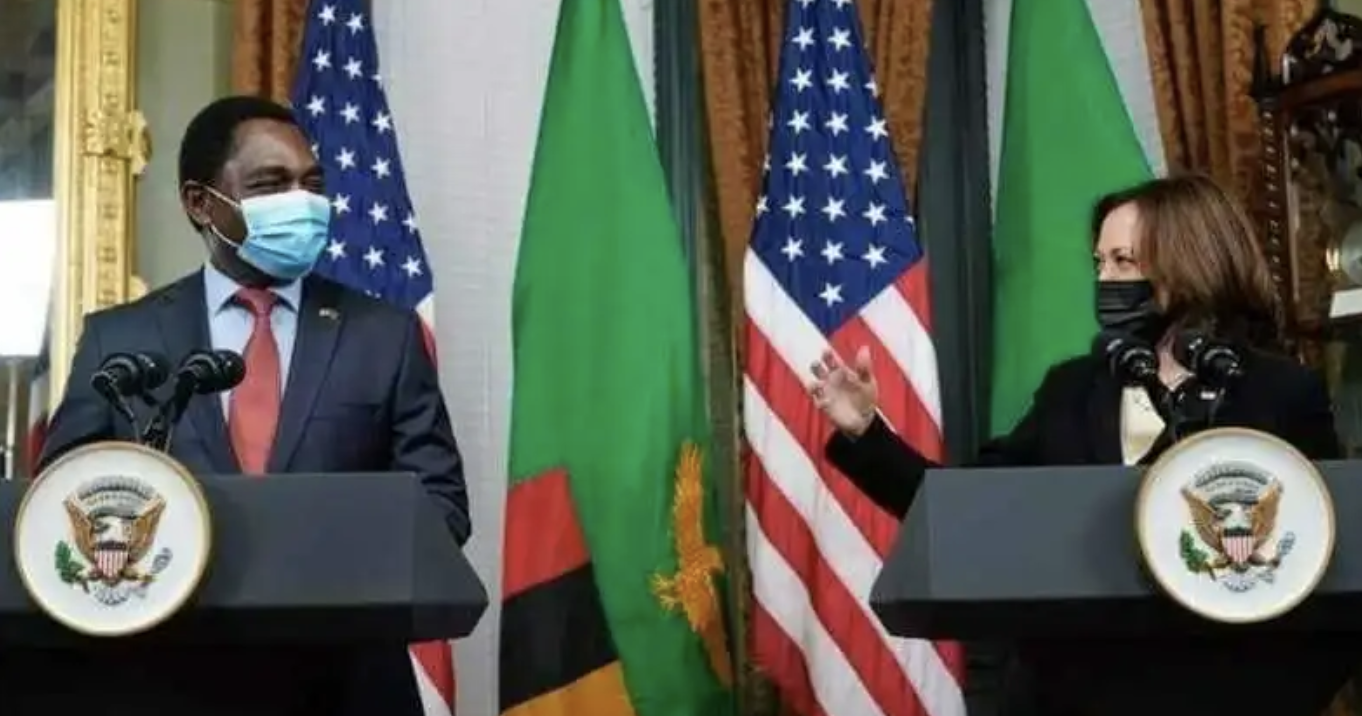
US Vice President Kamala Harris Visiting Zambia This Month
A White House official press release has announced that Zambia will be one of the nations that U.S. Vice President Kamala Harris and Second Gentleman Douglas Emhoff visit as part of their trip to Africa.
The White House announced that the visit “will build on the recent U.S.-Africa Leaders Summit” at Washington in December 2022, and aims to “strengthen the United States’ partnerships throughout Africa and advance our shared efforts on security and economic prosperity.”
Among the visit’s key goals will be to “expand access to the digital economy, support climate adaptation and resilience, and strengthen business ties and investment, including through innovation, entrepreneurship, and the economic empowerment of women”.
The press statement also confirmed that Vice President Harris will meet with Zambia President Hakainde Hichilema. The pair plan to discuss “regional and global priorities, including our shared commitment to democracy, inclusive and sustainable economic growth, food security, and the effects of Russia’s unprovoked war in Ukraine”.
Also scheduled are a number of meetings with “young leaders, business representatives, entrepreneurs, and members of the African Diaspora”.
The visit will begin on March 25 and end on April 2. Vice President Harris will visit Ghana, Tanzania, and then Zambia.

HH Opens Mimbula Mine
By Brian Mwale
ZNBC News
President HAKAINDE HICHILEMA has commissioned Mimbula Copper Mine in Chingola with a call to residents to safeguard the mine.
President HICHILEMA says the nine which has created 900 jobs is key to revenue generation, job creation and stabilizing the kwacha.
The President also urged workers to resort to dialogue when faced with grievances instead of taking to the streets.
Speaking during the Launch this afternoon, President HICHILEMA praised management of Mimbula which is owned by British Company Moxico Investments to ensure they look after workers.
He also encouraged foreign investors to partner with locals and work with local suppliers.
The President further noted that Mimbula’s planned expansion plan to increase production from the current 10-thousand tonnes to 56-thousand tones is key for national development.
He said the company’s expansion plan of extending to 56-thousand metric tonnes production from the current 10-thousand is key for development of surrounding communities.
President HICHILEMA said his job is to improve the country through hard work and investments such as Mimbula which has created Nine hundred jobs.
And, Mines Minister PAUL KABUSWE said Zambians are now able to experience peace and see development under the UPND.
He said Zambia’s economy has for the past 10 years been faced with challenges including the mining sector which are now being resolved.
Mr. KABUSWE urged all mining investors to be serious with their investments because government is in a hurry to develop the country.
Meanwhile, British High Commissioner to Zambia NICHOLAS WOOLLEY expressed delight with the strides made by the mine so far.
Mr. WOOLLEY said Moxico will invest a further One hundred million dollars bringing the firm’s cumulative investment to 180-million dollars.
He said Zambia has attracted significant investments from Britain with over 1-billion pounds by that country’s companies in green investments.
The British Envoy noted that the progress made at Mimbula is owing to close ties between government and the British government.
And, Chingola Member of Parliament CHIPOKA MULENGA said the mine has come with a speed of light implementing various projects and created decent jobs beyond Chingola.
He however asked Mimbula Minerals to give priority to Chingola residents when employing before looking elsewhere.
Mr. MULENGA said prioritizing locals for skills will promote ownership.
MEANWHILE, Mine Workers Union of Zambia -MUZ- President, JOSEPH CHEWE said Mimbula has given workers in Chingola an opportunity to work.
Mr. CHEWE said the workers are geared to put in their best but called for engagement of all workers decent jobs and salaries that will push them to work hard and look after their families.
And Mimbula Chief Executive Officer, ALLAN DAVIES said the company has already engaged about 9-hundred employees within 14 months of operations.
He thanked government for its continued support to the mine saying the firm now plans expansion in its operations at a new site.
This article originally appeared on ZNBC
Zambia Investor Briefing: February 2023
ZAMBIA INVESTOR BRIEFING
February 2023
OVERVIEW
Minister of Health Sylvia Masebo has identified Zambia’s pharmaceutical sector as a priority industry for foreign direct investment. It will form a key part of the government’s post-pandemic approach to improving health security, she said, and the drive to promote private sector driven socio-economic development. Her comment comes as Lusaka readies itself for the Zambia-EU Pharmaceutical Manufacturing Forum, designed to foster greater collaboration between Zambia’s pharmaceutical industry and international pharmaceutical giants. Other participants will include those from the finance, textiles and insurance industries.
President Hilchilema travelled to Addis Ababa, Ethiopia, to take part in the 36th Ordinary Session of the Assembly of the African Union. While there, the president held bilaterals with a number of heads of state, including President Samia Suluhu Hassan of Tanzania, and the DRC’s Félix Tshisekedi. Presidents Hilchilema and Hassan agreed to fast-track the upgrade of the TAZAMA pipeline, which carries crude oil between Tanzania and Zambia, while his meeting with Tshisekedi centred on solving issues at the Kasumbalesa border crossing.
US Under Secretary for International Trade, Marisa Lago, met with President Hichilema in Lusaka. The pair discussed the Commercial Memorandum of Understanding (MoU) that “will leverage our shared interests into closer business linkages between our two nations and drive inclusive economic growth”, the president wrote. Lago’s visit came off the back of the Africa Leadership Summit, held in December in Washington, D.C., when Hilchilema met with both US Secretary of Commerce, Gina Raimundo and President Joe Biden.
Blue Carbon signed an MoU with the Government of Zambia which will kickstart carbon removal projects in Zambia’s forestry sector. The Dubai-based company supports such projects under Article 6 of the Paris Agreement. Both President Hichilema and Blue Carbon Chairman Sheikh Ahmed Dalmook Al Maktoum were present at the signing in Lusaka. Al Maktoum said “We are confident that our robust decarbonisation model will enable the Zambian government to preserve its forest resources and reduce greenhouse gas emissions efficiently”.
Invest Africa are to lead a delegation for an Investment and Trade Mission to Lusaka in March. The Mission aims to provide a platform for international and regional investors to engage with senior government officials, in addition to key investment and trade institutions, such as the Zambia Development Agency. The delegation will hold meetings with President Hichilema, the Central Bank Reserve Governor, and the Minister of Industry, Trade and Commerce, amongst others.
The Board of Directors of the Zambia Development Agency has appointed Albert Halwampa as the New Director General. The ZDA said “Mr Halwampa brings with him a wealth of knowledge and strategic experience in promoting trade, investment and policy development in regional and international markets. There is no doubt his experience will bring about the desired change and contribution to the increase in investments in Zambia”.
Foreign Direct Investment
February saw a number of significant developments with regards to foreign direct investment (FDI) in Zambia. High-level meetings took place between President Hichilema and UAE-based Blue Carbon, representatives from Citi Bank and Standard Bank, in addition to discussions with US Under Secretary for International Trade, Marisa Lago.
State House also played host to a delegation from the Africa Finance Corporation, meeting with its President and CEO Samaila Dalhat Zubairu to how Zambia can best utilise public-private partnerships to accelerate economic development.
All of this comes ahead of the Zambia-EU Pharmaceutical Manufacturing Forum, which will be held from 01 - 03 March 2023 in Lusaka. Health Minister Sylvia Masebo told the media that nine Zambian pharmaceutical firms have confirmed their plans to attend, alongside 28 international pharmaceutical companies, under the theme “Strengthening Healthcare Through Local Pharmaceutical Manufacturing.” “The need to promote FDI and other forms of private-public partnerships has already been identified as key to the ambition”, she added.
A delegation from Invest Africa, a business and investment platform that aims to provide its members with information and exposure to business opportunities to invest in the continent, will travel to Lusaka in March. Limited spaces are still available for international delegates to join the Mission. If you are interested, please contact farha.musa@investafrica.com.
Regional Partners
The 36th Ordinary Session of the Assembly of the African Union was held in Addis Ababa, which saw President Azali Assoumani of Comoros elected as New Chairperson for 2023, taking over from Senegal’s President Macky Sall.
President Hichilema met with several leaders on the sidelines of the summit, including Tanzania’s President Suluhu Hassan. The pair agreed to expedite the upgrade of the 50 year old TAZAMA oil pipeline that runs from the Tanzanian port city of Dar es Salaam to Ndola in Zambia. Energy Minister Peter Kapala said the agreement would help help the cost of petrol affordable for citizens and businesses alike.
Both Hichilema and his Congolese counterpart Félix Tshisekedi have vowed to solve the issues that persist at the Kasumbalesa border crossing between their two countries. A huge increase in the demand for copper and cobalt globally, key components in electric batteries, has seen long queues form on both sides of the border. Zambia’s Transport and Logistics Minister Frank Tayali has said that poor customs services are also partly to blame.
LATEST TRENDS
GDP

Inflation

Currency
1 USD = 19.95 ZMW 30 day average = 19.349 Volatility (last 30 days) = 0.5%
OTHER NEWS
Angola, Zambia and DRC take step towards creating trade corridor, 01.02.23, Business Live
Letter: China is the key to unlock Zambia debt restructuring, 06.02.23, Financial Times
Zambian finance minister criticises creditor delays in debt restructuring, 13.02.23, Financial Times
World’s largest man-made dam weighs using floating solar panels, 16.02.23, Bloomberg
Zambia secures funds for climate adaptation with Commonwealth support, 21.02.23, The Commonwealth
Zambia inflation accelerates as underlying price pressures build, 23.02.23, Bloomberg
Zambia’s Moping halts mine shaft operations after worker dies, 28.02.23, Reuters
UPCOMING EVENTS
01.03.23 - 03.03.23
Zambia-EU Pharmaceutical Manufacturing Forum
Lusaka, Zambia
20.03.23 - 23.03.23
Investor Mission to Zambia, Lusaka
CONTACT US
If you would like to find out more or receive tailored briefings on specific sectors get in touch via info@zambiaisback.com. To stay up to date follow us on social media:
Facebook: @zambiaisback
Twitter: @ZambiaIsBack
Instagram: zambia_isback

Invest Africa Leads Trade Mission To Zambia; Meeting With President Hichilema

On the back of past successful investor and trade missions to Tanzania, Ethiopia and Angola, Invest Africa are leading a delegation for an Investment and Trade Mission to Lusaka, Zambia from 20 to 23 March 2023.
The main objective of the Mission is to provide a platform for international and regional investors to meet and engage with senior Zambian government officials, as well as key Zambian investment and trade institutions including the Zambia Development Agency (ZDA) and the Public-Private Dialogue Forum. Meetings will also be held with private sector organisations to promote and build connections for potential investment and trade opportunities.
Invest Africa has assembled a comprehensive agenda to make the trip as valuable as possible. The delegation has been granted an audience with Zambian President, His Excellency Hakainde Hichilema, as well as meetings with with the Central Bank Reserve Governor, the Minister of Industry, Trade and Commerce, the Zambian Development Agency, and other ministries.
The delegation will look to gain more detailed insights into opportunities within Zambia’s key sectors, including agriculture and agribusiness; infrastructure development; mining and minerals; energy and renewables; and travel and tourism. The delegation will also learn about Zambia’s services sector – including ICT, legal and financial services – as well as manufacturing firms, such as engineering, textiles, building materials, food processing, chemicals, and pharmaceuticals.
Zambia’s business environment is going from strength to strength, as investors continue to express renewed confidence in the government’s business-friendly policy reforms. In 2022, the country received a record $8.59 billion in foreign investments and is set to become an even more attractive investment destination in 2023.
Invest Africa CEO, Karen Taylor said, “This Mission to Zambia comes at the right time as we see the government’s efforts to diversify the economy by stimulating private sector growth which is vital to sustained economic growth.”
There are limited spaces still available for international delegates to join this Mission and interested organisations can contact Mission organiser, Farha Musa at Invest Africa.
About Invest Africa
Invest Africa is Africa’s leading international business and investment development platform. With over sixty years of history, our network is made up of more than 400 global organisations, private investors, fund managers, family offices, policy makers and entrepreneurs. Together they share a desire to build opportunity across the African continent. As the trusted entry point into Africa, we support and connect business and investment through a unique range of services and events; from world-leading business conferences and bespoke trade and investment missions to sector specialist event programmes and consultancy projects. Our team comprises leading specialists in international trade and investment promotion, public affairs, conferences and events and business strategy.
Mission Contacts:
Farha Musa – farha.musa@investafrica.com Charlotte Kemp – charlotte.kemp@investafrica.com
Media Contacts:
Choolwe Chibomba – choolwe@zambiaisback.com

UK Energy Sector Delegation Formalises $2 Billion Investment Package
After 15 months of agreements, talks and negotiations that began at COP26 in November 2021, Zambia’s President Hakainde Hichilema and a Nicholas Woolley-led UK energy commission have finalised a US $2 billion green energy joint ventures agreement.

Zambian and UK energy delegates outside State House following the agreement. (@HHichilema)
Back in 2021, Foreign Minister Stanley Kakubo and UK Minister for Africa signed a landmark partnership aimed at driving sustainable economic growth that conformed to the environmentally friendly principles of Glasgow’s COP26 climate summit.
Signed in London, the Green Growth Compact outlined expectations of billions of pounds of investments, doubled trade volume between the UK and Zambia, and £100 million ($135 million) of financial resources as part of Zambia’s then-blossoming Small and Medium Enterprises (SMEs) support initiative.
At that time, Vicky Ford’s comments on the deal included an expectation of final British investment induced by the Compact, announcing that “The Green Growth Compact is a landmark agreement that will benefit the UK and Zambia by boosting UK investment in Zambia by up to £1 billion, creating thousands of jobs and supporting green energy production”. The deal signed yesterday has doubled that figure, marking yet another milestone in negotiations to secure a better future for Zambia.

Hon. Stanley Kakubo and Vicky Ford celebrating the Green Growth Compact in London. (future Net Zero)
Nicholas Woolley’s role in Zambia’s green transition is not to be underestimated. The British High Commissioner to Zambia identified at the time of the Compact’s signing that its primary significance was the foundation it provided for “stronger trade and investment […] based on sustainability, mutual prosperity and creating opportunities for business and communities in both our countries”.
Fast forward 15 months, and Mr. Woolley continues to broker UK-Zambia energy agreements to the benefit of both nations, the latest of which is the $2 billion package. The template of the 2021 Compact continues to be used to great effect by UPND and Mr. Kakubo, with both the UK and Zambia’s other investment partner nations.
Mr. Woolley told ZNBC News in a January 11 interview that seven companies were conducting feasibility studies and applying for regulatory approvals. All seven had approved and outlined deals to bring solar and wind energy projects to Zambia to add 2,000 megawatts to the ZESCO grid, and had a 2-5 year completion timeline. The British power companies in question were Hive Green, Western Power, Buffalo Energy, Africa GreenCo, First Quantum Minerals Solar Energy, Vitalite Solar and SolarAid.
Since Hakainde Hichilema’s election in August 2021, First Quantum Minerals in particular has displayed enormous fiscal confidence in Zambia’s economic resurgence. The company operates two mines in Zambia, Sentinel and Kansanshi, the latter of which they invested $1.25 billion in May 2022. First Quantum Minerals has also played an important role in Zambia’s drive to increase nickel production, investing $100 million into its efforts to produce 30,000 annual tonnes of nickel concentrate.

The FQM refinery plant at Kansanshi. (First Quantum Minerals Ltd.)
First Quantum and its six compatriot firms have all passed their feasibility and regulatory assessments, it seems, since the announced figure matches that proposed in January. The finer details are expected to be announced in the coming weeks.
The deal’s announcement comes just over a month after ZESCO signed an agreement with UAE renewable energy firm Masdar for solar projects amounting to $2 billion. That project immediately triggered the installation of a 500 megawatt solar plant, with other planned projects forecasted to generate an additional 2,000 megawatts.
The combined deals will furnish Zambia with 4,000 megawatts of clean, renewable energy – all of which will be non-hydro. Hydroelectric power currently accounts for 85%, or 2400 megawatts, of Zambia’s 2,800 megawatt installed electricity generation capacity.
With decreasing water levels, unpredictable rain seasons and increasingly frequent floods, hydroelectric power is becoming a less reliable energy source, and record low water volumes in Zambia’s Kariba dam in 2022 were the primary cause of recent load-shedding blackouts.
The two deals will significantly totally eliminate Zambian dependency on hydroelectric power once complete, opening the door for renovation works on the 3 major hydroelectric dams that are 49, 50 and 64 years old. The Kariba Dam, Zambia’s largest, was chronically under-maintained over the course of former President Lungu’s administration, to the point where the world-famous New Yorker news magazine published a two-page spread that likened the risk of the dam’s collapse to “the dam industry’s Chernobyl”.

The Kariba Dam in 2016, around the time concern was raised about its condition. (Daily Maverick)
The completed solar farms will represent a 142% increase in Zambia’s generation capacity, guaranteeing constant power now and in the future as Zambia grows, and ensuring that rural and isolated communities will also have access to electricity. It is expected that these packages will also include the funding necessary to introduce the infrastructure needed for effective energy supply, which will have major secondary transport benefits for Zambian citizens living in areas near the solar farms.
Hakainde Hichilema has placed great stress on empowering SMEs to drive equitable Zambian growth, and has recognised the role smallholding farmers can play in Zambian agricultural production to boost the economy and fight African food insecurity.
During her visit to Zambia, U.S. Treasury Secretary Janet Yellen stressed the pivotal impact Zambian smallholding farmers can have on a food chain under constant stress thanks to Russia’s invasion of Ukraine, describing Africa as having “the potential not only to feed itself but also to help feed the world – if the right steps are taken”. With each new deal, investment agreement and public project announced, President Hichilema and his cabinet continue to take those very steps towards a future of Zambian prosperity.
Charter Cities Institute Launches Office in Zambia
Last week, the celebrated Charter Cities Institute (CCI) marked its anniversary in Zambia by opening a permanent Lusaka Office on Haile Selassie Avenue. Known for innovating urbanisation projects to improve average income, quality of living and productivity, as its motto suggests, “Harnessing Urbanisation for Human Prosperity”, CCI has decided that recent signs of Zambian financial recovery and industrial growth mean that the time is right to bring CCI thinking to Zambia.
CCI is a non-profit organisation that promotes the creation of charter cities. Charter cities are new cities granted special jurisdiction, which gives local authorities the ability to implement practices and commercial regulations to drive growth. CCI brings high-functioning businesspeople together to provide the necessary assistance to those planning charter cities to optimise their performance.
Charter cities are known for creating highly competitive business environments that attract investment, create jobs and improve the lives of millions, making them one of the best methods of rapid urbanisation for driving widespread economic growth. Examples of charter cities include: Shenzen, whose average yearly income grew from $137 USD in 1980 to $13,997 USD in 2017; Singapore, whose GDP per capita was $428 USD in 1960 and reached $64,582 USD in 2018; Hong Kong, with a GDP per capita of $5,700 USD in 1980 and $46,193 USD in 2018; Dubai, whose total UAE GDP was $75 billion USD in 1980 and reached $689 billion USD in 2017.

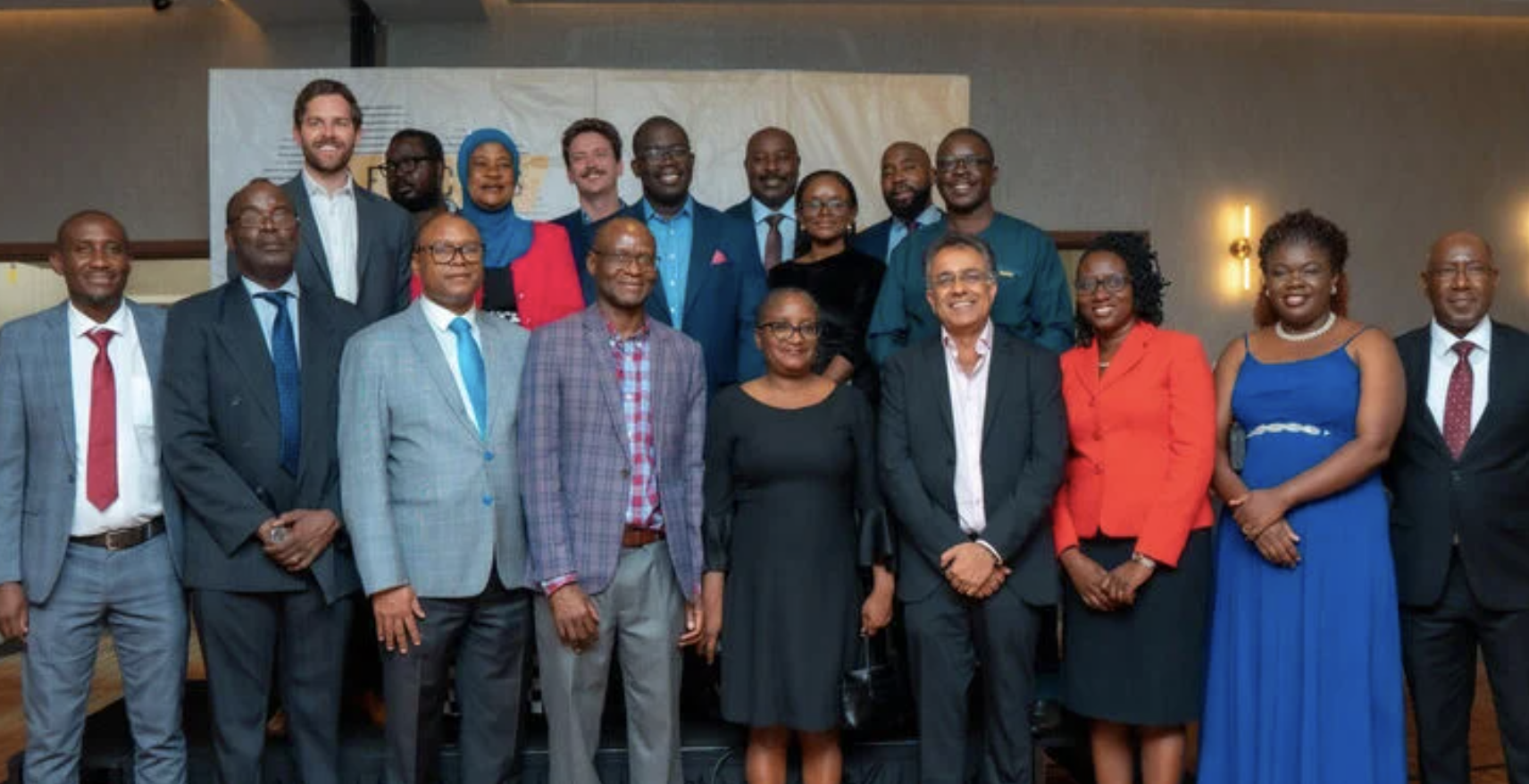
CCI’s Lusaka Team, pictured at the Lusaka office launch party. (Lusaka Times)
CCI Zambia launched in 2021, and has worked with President Hakainde Hichilema’s New Dawn government with extraordinary success. Their charter cities movement is underway in Zambia, with stakeholders and the Zambian government collaborating to foster an environment for charter cities to prosper. The Multi-Facility Economic Zone program has been key to creating such an environment. President Hichilema and his party have demonstrated their enthusiasm to improve the lives of Zambia’s people; CCI has brought think tanks, associations and global businesses to the table to realise this aim.
Honoured with an invitation to the high-profile event on 13 February was Zambia is Back’s spokesperson Choolwe Chimboba met with various international corporations. Among the many international guests and businesspeople present was Russian-Canadian computer genius, entrepreneur and Ethereum co-founder Vitalik Buterin. The two networked, discussing Zambia’s bright future.

Vitalik Buterin and Choolwe Chimboba at the party.
The event opened with welcome remarks from Special Assistant to the President Jito Kayumba, Kurtis Lockhart, the global Executive Director of CCI, and Mwanda Phiri-Mwewa, the Africa Lead for CCI. Zambia’s Permanent Secretary for Administration Maambo Hamaundu then discussed Zambia’s role in the CCI joint program.
Mr. Buterin was among the four CCI ambassadors who gave Keynote speeches – joining him were Mwiya Musokotwane, CEO and Founder of Thebe Investment Management limited, Daniel Yu, CEO and Founder of tech firm Wasoko, and Guest of Honour Chipoka Mulenga, Zambia’s Minister of Commerce, Trade and Industry. The four speakers represent how CCI can help shape Zambia’s future, through construction of infrastructure, tech-based business improvement, globalised business models through internet-powered finance and responsible government fiscal policy at an international, national and local scale.
The event demonstrated the great future CCI’s contribution to Zambian policy will have – the speeches given were infused with professional credibility, diligence and robust optimism for Zambian growth. The coming together of Zambian businesspeople and pioneers, global-level drivers of industry and CCI’s roster of changemakers based at the CCI Lusaka Urban Lab offered an insight into how UPND’s foray into international investment and development has already begun to rejuvenate Zambia into a nation looking ahead to a better future.
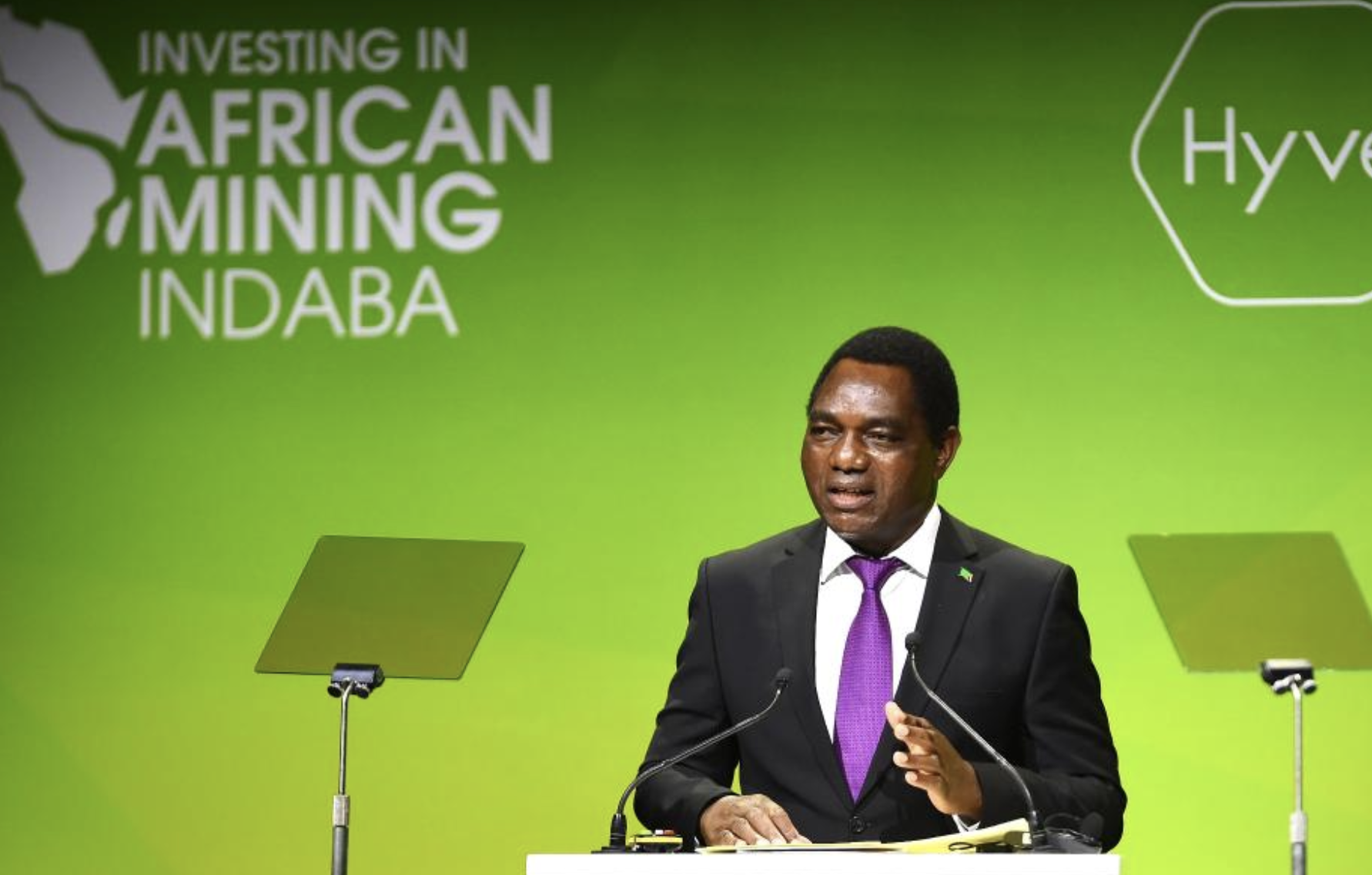
Zambia shines at African Mining Indaba
Zambia demonstrated its return to industrial strength at this year’s African Mining Indaba, reminding Africa of the resources it has to offer amid a surge of foreign investment deals.
The reputation of Zambian mining declined under the leadership of former President Edgar Lungu, thanks to uncertainty about taxation, resource nationalism and corruption widely believed to be endemic. Zambia did not receive a spotlight at the Indabas of those years.
Since his UPND Party’s election to power in August 2021, President Hakainde Hichilema has done his utmost in his 18 months in charge to kickstart ailing industry in Zambia. Mining has been re-evaluated by his cabinet, and is now a crown jewel in the reversal of Zambia’s previously waning fortunes.
As a successful businessman before entering the political scene, President Hichilema has recognised the immediate value of foreign investment in bringing expertise, economic growth and improved infrastructure to the people of Zambia. Previously-unseen levels of interest in Zambian mining opportunities at the 2022 and 2023 Indabas are indicators of Zambia’s upward trajectory.

Leaves of Zambian copper awaiting transport. (Mining for Zambia)
Speaking on Zambia’s global image, Neal Froneman, CEO of Sibanye-Stillwater, a precious metals multinational giant, commented, “Zambia is looking very good […] We like Zambia as a destination. There are some great copper assets in Zambia.” When asked about Mr. Hichilema’s role in Zambia’s new look, he added, “President Hichilema is a professional; he’s doing exactly the right things. His focus is strongly focused on commercial realities and is just a breath of fresh air”.
Froneman’s mention of copper is astute. In the transition to greener energy, copper is a critical metal. Zambia was the second largest African producer of copper in 2021, and President Hichilema has seized this opportunity to propel Zambian development with both hands. At last year’s Indaba, Zambia made headlines when the copper producer First Quantum metals announced the outright largest investment in Zambia in a decade, in the form of two projects totalling to $1.35 billion.
Other mining directors at the Indaba acknowledged the role copper has to play in Zambia’s growing prosperity, including Modern Corporate Solutions’ director, Peter Major: “The people there really want mining, the government is quite accessible, there’s no BEE, the legislation is clear, and they have a proper mining cadastre”.
Zambia’s mining cadastre has been a driving factor in the sector’s growth. The online portal offers information freely accessible to the public about which companies have mining permits in which regions, and is considered part of Zambia’s campaign for an informed public united against corruption.

One of the many maps available on the Zambian mining cadastre portal. (MMMD)
Zambia’s growing mining relations with the DRC are also an indicator of UPND’s ambitions. In 2021, the DRC was the world’s largest cobalt producer, mining more than 70% of the world’s cobalt, and it consistently tops the African copper mining table. Marna Cloete, president at Ivanhoe Mines, which has assets in the DRC, was impressed by the improvement in relations: “The president comes from a business background […] He’s actively pursuing investment. He’s a very dynamic person. We do engage with Zambia on infrastructure because we share a border and we have seen vast improvement in terms of relations with the Zambian government”.
Ivanhoe is currently in negotiations to establish a border crossing for mining products. In January 2023, the United States announced a Memorandum of Understanding between Zambia and the DRC on electric vehicle battery value chains. The U.S. Department of State described the memorandum as inviting “open and transparent investment to build value-added and sustainable industry in Africa and creating a just energy transition for workers and local communities”. The U.S.’s role in the partnership will be to offer technical knowledge, financing and private sector investment opportunities.
The Memorandum of Understanding was announced one month after the U.S.-Africa Leaders Summit. While in Washington DC, President Hichilema presented his ‘Green Energy Mining Deal’ lecture, in which he announced that Zambia would reset its relationship with China and the USA. By the end of the trip, Zambia had secured its first major direct American investment in over three decades.

President Hichilema’s official photograph is taken with President Biden and the First Lady after the Summit. (ZNBC)
Present at the Indaba was Paul Kabuswe, the Minister of Mines and Minerals Development. By the conclusion of the Indaba, Mr. Kabuswe was pleased to unveil a timeline for the Mopani Copper Mines. 10 suitors for the mine and smelter complex had come forward with investment plans, one of whom would be selected for partnership at Mopani by the end of March. The Mopani investment project is proof of Zambia’s intent to mine three million tonnes of copper annually by 2032.
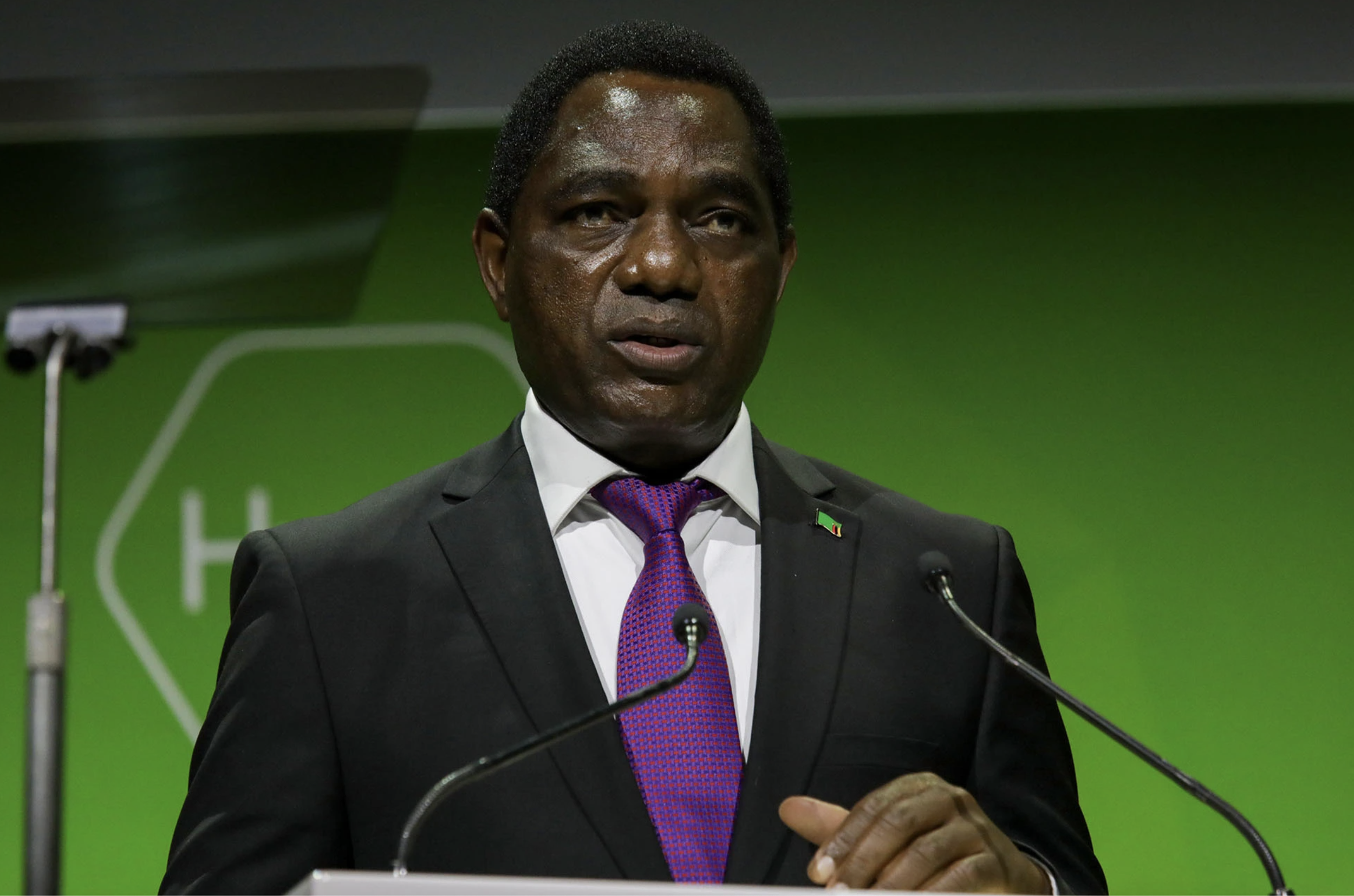
Copper-rich Zambia is a breath of fresh air for foreign investors
By Ed Stoddard
A recurring theme at the Investing in African Mining Indaba is the rise and fall of countries as investment destinations. The annual conference is, in some ways, like a beauty contest for capital. At this year’s Indaba, Zambia emerged as one of the winners.
Zambian President Hakainde Hichilema, a former businessperson, has been attempting to woo foreign investors since he came to power in August 2021. And they have certainly been charmed.
“Zambia is looking very good. President Hichilema is a professional; he’s doing exactly the right things. His focus is strongly focused on commercial realities and [he] is just a breath of fresh air,” Sibanye-Stillwater CEO Neal Froneman told Business Maverick in an interview.
“We like Zambia as a destination. There are some great copper assets in Zambia,” Froneman said.
Froneman would not specifically say if Sibanye was planning on acquiring a copper asset in Zambia, but the company is clearly taking a hard look there.
Froneman, who has transformed Sibanye from a Gold Fields’ spin-off focused on conventional gold mines in South Africa into a diversified metals producer, is a deal-maker of note.
Copper fits perfectly with its strategy of moving into the “green” or “critical” metals seen as vital to the global clean energy transition.
“Some of the assets are deep and there is not a lot of companies with deep underground mining experience. You have projects in liquidation and companies that hold large debt positions. So we have a skill set required to unlock value from those assets,” Froneman said.
On the catwalk
Other investors and executives also applauded Zambia’s performance on the catwalk.
“The people there really want mining, the government is quite accessible, there’s no BEE, the legislation is clear, and they have a proper mining cadastre,” said Peter Major, director of mining at Modern Corporate Solutions. Major is in the process of raising funds for a zinc project in central Zambia.
Zambia’s mining cadastre, like Botswana’s, is impressive, transparently providing investors and the public with information about which companies have mining rights and permits, and where.
It’s what a cadastre is supposed to do, and South Africa’s lack of one remains a major deterrent to investment in its mining sector. But President Cyril Ramaphosa did tell the Indaba on Tuesday, 7 February, that South Africa was on track to procure one.
Marna Cloete, president at Ivanhoe Mines, also said Zambia’s star was rising. Ivanhoe does not have assets there, but it operates across the border in the DRC, which is also rich in copper.
“The president [of Zambia] comes from a business background… He’s actively pursuing investment. He’s a very dynamic person. We do engage with Zambia on infrastructure because we share a border and we have seen vast improvement in terms of engagement with the Zambian government,” she said.
These include negotiations for a border crossing to facilitate the movement of Ivanhoe’s products.
Valuable commodities
At past Indabas, Zambia’s light has shone less brightly. A few years ago, there were uncertainties about taxes and concerns about resource nationalism. Under Edgar Lungu, Hichilema’s predecessor, corruption was widely perceived to have flourished and the mining sector was a frequent target of political wrath.
And, of course, decades ago there was the whole debacle around nationalisation under Kenneth Kuanda.
Zambia is studded with copper and it also has cobalt, a crucial battery metal. It also has gold, nickel and manganese among other valuable commodities.
The interest in Zambia displayed by players in the mining sector this time round builds on Hichilema’s performance at the Indaba in May of last year, when copper producer First Quantum Minerals announced the largest investment in Zambia in a decade: $1.35-billion in two new projects.
Several attendees at this year’s Indaba spoke glowingly about how Zambia impressed in May of last year, an indication that the narrative that got rolling then remains in play. In South Africa, the “Ramaphoria” that was still in the air at the 2018 Indaba quickly faded.
Land-locked and tropical, it faces serious challenges to development. But the current perception is that Hichilema is determined to unlock the country’s resource value through foreign investment.
If an executive such as Froneman is looking, you are probably doing something right on that front.
This is an article taken from the Daily Maverick. All rights to this article and its images belong to the Daily Maverick.
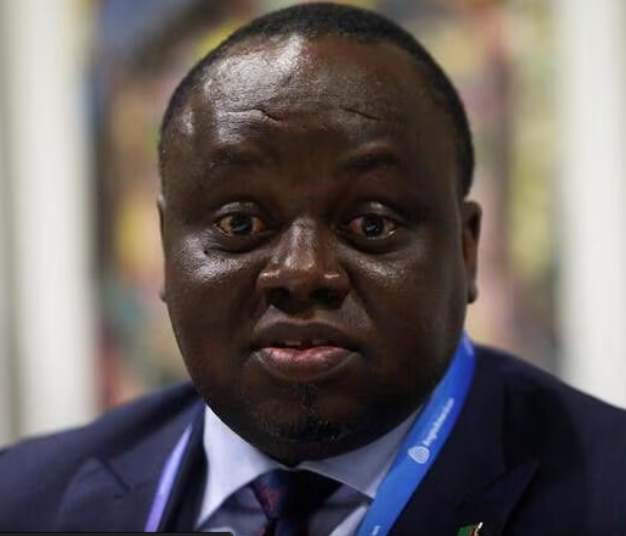
Zambia's mining minister expects Mopani Copper Mines deal by end-March
CAPE TOWN, Feb 6 (Reuters) - Mopani Copper Mines will secure a new investor by the end of this quarter, Zambia's mines minister Paul Kabuswe said on Monday, calling the complex owned by state mining investment firm ZCCM-IH a "critical asset" for the country's copperbelt.
There are 10 suitors for the mine and smelter complex, including South Africa-listed mining firm Sibanye-Stillwater and "one or two" Chinese mining firms, Kabuswe said in an interview on the sidelines of the Mining Indaba in Cape Town.
Sibanye CEO Neal Froneman in October told Reuters the company was interested in Mopani.
"There is interest from all over, including the Arab world," Kabuswe said, declining to name any of the other interested parties.
Asked about the competition for African metals and minerals pitting the United States and Europe against China, Kabuswe said Zambia did not differentiate between investors provided they brought value into the country.
"We are dealing with the Arab world, we are dealing with the U.S., we are dealing with China, we are not biased towards anyone," Kabuswe said. "We are friendly to everybody."
Zambia is also aiming for an agreement with Konkola Copper Mines owner Vedanta Resources by the end of the first quarter, Kabuswe said. Zambia last year decided to seek an out-of-court settlement with Vedanta after a lengthy dispute over KCM.
Increasing Zambia's copper production is necessary to reduce the country's debt burden, Kabuswe said, as growth in the mining industry will trigger investment in infrastructure and other sectors.
Zambia has set a goal of increasing copper production to 3 million tonnes a year by 2032. The country is struggling to cut debt after becoming the continent's first COVID-era default in 2020.
Zambia Investor Briefing January 2023
ZAMBIA INVESTOR BRIEFING
January 2023
OVERVIEW
US Treasury Secretary Janet Yellen visited Zambia as part of a three-country visit to Africa. She reiterated the importance of restructuring the country’s debt, something she remained optimistic about following talks with the Chinese in Zurich the week before. Yellen further encouraged President Hichilema to continue the fight against corruption. “I would say the work isn’t done, but there clearly has been an important focus on it”, she said. Talks also touched on food and health security.
State House played host to the International Monetary Fund (IMF)’s Managing Director, Kristalina Georgieva, who met with President Hichilema, Finance Minister Situmbeko Musokotwane and central bank governor Denny Kalyalya, amongst others. The visit centred on debt restructuring, with both sides urging the country’s creditors to ensure an agreement is in place as soon as possible. Georgieva praised the New Dawn government’s efforts “to improve the use of public resources” and “tackle corruption” which, she said, would “create a better environment for investors and businesses”.
A Zambian government delegation, headed by the President, attended Abu Dhabi Sustainability Week, an antecedent to COP28, which will be hosted in the Emirati capital between November and December 2023. The summit yielded a number of agreements, including a Memorandum of Understanding (MoU) and Joint Development Agreement (JDA), signed with the UAE, aimed at facilitating renewable energy investment. Zambia’s state-backed energy company, ZESCO, will form a joint venture with MASDAR, a UAE-government owned renewable energy company, that will develop and deploy solar projects that are estimated to generate an additional 2000 megawatts of energy.
President Hilchilema attended the ‘Dakar 2 Feed Africa: Food Sovereignty and Resilience’ summit in Senegal. Held in collaboration with the African Development Bank and the International Fund for Agricultural Research, the summit convened heads of state from across the continent to mobilise and align government resources, development partners and private sector financing to “unleash Africa’s food production potential”.
Angolan President Joāo Lourenço welcomed President Hichilema for a three-day state visit to discuss trade, investment, energy and infrastructure. In addition to signing an MoU, the two countries agreed to resume direct flights between Lusaka and Luanda. The President also addressed Angola’s National Assembly on the importance of good governance and democracy.
Debt Management
Visits from both the IMF’s Managing Director and US Treasury Secretary this month highlighted the support the Zambian government enjoys from both the international and multilateral communities on to the question of debt restructuring.
Both the IMF’s Georgieva and the US’s Yellen urged creditors to quickly resolve negotiations that have until now, according to Zambian Finance Minister Musokotwane, moved too slowly with a still uncertain outcome. Yellen singled out China as being a “barrier” to ending the debt crisis.
Without restructuring Zambia cannot access a USD 1.3 billion bailout form the IMF, which would give a much-needed boost to the economy. It is hoped that the two high-profile visits will bring renewed attention to the issue of debt management.
Foreign Direct Investment
The Zambian Development Agency (ZDA) registered a more than 150% increase in the number of investment ventures in 2022 compared with 2021. Last year saw 351 registered ventures, yielding an investment of USD 8.59 billion, compared with 255 the previous year, an increase of close to 158%.
According to Albert Halwampa, the ZDA’s acting director general, this translates to just under 75,000 new jobs in critical sectors such as manufacturing, energy, mining, transport, construction and agriculture.
A ZDA report indicted that the country’s improved macroeconomic environment was underpinned by an increase in investor confidence, “triggered by sound economic policies by the government including stabilisation of the macroeconomic fundamentals, implementation of fiscal measures and reaching the IMF Staff Level Agreement on an extended credit facility arrangement with Zambia”.
Agricultural and Mining Developments
Following the December announcement from KoBold, a consortium backed by tech giants Jeff Bezos, Bill Gates and Richard Branson, stating that they will invest in Zambia’s mines, the country’s agriculture sector is too enjoying an economic boon.
Munkotachi, an SME based in the Chongwe district of Lusaka province, has received certification from GlobalG.A.P. - a European retailers standard for good agricultural practices - which will allow its avocados and avocado oils to be sold in the European Union.
Managing Director Christopher Lesa has also said that that the company hopes to expand its poultry farming operation, with the aim of developing more than 90 cooperatives, each with at least 20 members. “The government is trying to support SMEs in so many ways”, he said, “so that people out there can benefit and improve their lives”.
Munkotachi is hoping to plant two million avocado trees on 5,000 hectares across four regions of Zambia, and expects to employ more than 30,000 small-scale farmers.
Load Shedding
The government-backed energy provider, ZESCO, has extended electricity rationing to mining companies following a drop off in water levels at Lake Kariba. According to the Zambezi Water Authority, which manages the lake’s dam, water levels were down to 1.66% of usable storage for both the Kariba North Bank Power Station and the Kariba South Bank Power Station, found on the Zimbabwean side of the lake.
ZESCO had already been forced to reduce electricity flows to domestic customers as the low water levels threatened power generation.
The utility’s chairman, Vickson Ncube, has said that power rationing was expected to be reduced by the middle of next month as water levels recovered. Full generation is likely to resume in March.
LATEST TRENDS
GDP

Inflation

Currency
1 USD = 19.05 ZMW 30 day average = 18.484 Volatility (last 30 days) = 0.48%
OTHER NEWS
Zambia: Abolition of the death penalty ‘a historic milestone’, 06.01.23, United Nations
Climate change action could set off a copper mining boom: How Zambia can make the most of it, 08.01.23, The Conversation
Zambia, UAE to develop $2 billion solar projects, 17.01.23, Reuters
Zambia joins Ghana in its quest to restructure its debt under the G20 Common Framework, 23.01.23, Business Insider Africa
Janet Yellen pushes China on debt relief for Zambia, 23.01.23, The Wall Street Journal
Yellen visits Zambian farm to showcase Africa’s ag potential, 26.01.23, Associated Press
Zesco seeks liquidation of Zambia Electrometer Ltd over unpaid debt, 30.01.23, Diggers
UPCOMING EVENTS
06.02.23 - 09.02.23
Cape Town, SA
20.03.23 - 23.03.23
Investor Mission to Zambia, Lusaka
CONTACT US
If you would like to find out more or receive tailored briefings on specific sectors get in touch via info@zambiaisback.com. To stay up to date follow us on social media:
Facebook: @zambiaisback
Twitter: @ZambiaIsBack
Instagram: zambia_isback
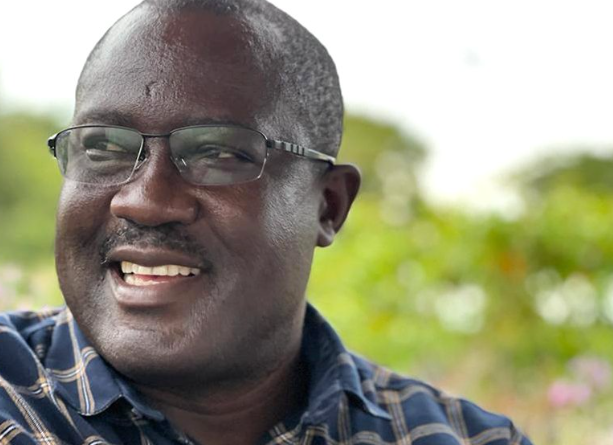
Copper-copious Zambia stepping up agricultural prowess, embarking on robust outreach
JOHANNESBURG (miningweekly.com) – Mining and agriculture are two key sectors of the Zambian economy that are attracting foreign direct investment, which rose 158% to $8.5-billion in 2022, creating 74 000 jobs.
The latest company to announce that it will be developing a new copper mine in Zambia is one linked to Microsoft's Bill Gates, Amazon's Jeff Bezos and Virgin's Richard Branson, while on the agricultural front, Zambia has embarked on a robust agriculture outreach throughout the country, Munkotachi Investments MD Christopher Lesa outlined in a Zoom interview.
Munkotachi, a small and medium-sized enterprise (SME) in the Chongwe district of Lusaka province, will this month begin reaping the rewards of agricultural exportation from Zambia, facilitated by a GLOBALG.A.P. certificate that opens the door for its hass avocados and avocado oils to be sold into the European Union and other overseas markets. Munkotachi is also intent on expanding its poultry farms, which produce 350 trays of eggs a day.
Being targeted is the development of more than 90 agricultural cooperatives, each with a minimum of 20 members.
“The government is trying to support SMEs in so many ways, as well as cooperatives, so that people out there can benefit and improve their livelihoods,” said Lesa, who is intent on establishing what he refers to as an avocado belt.
Interestingly, on the copper front, the Gates-Bezos-Branson-linked KoBold Metals uses artificial intelligence and machine learning to identify deposits.
KoBold is advancing the Mingomba copper project, a joint venture with Australian private equity firm EMR Capital and Zambia's State-backed mining company ZCCM-IH. The investment is seen as a win for Zambia President Hakainde Hichilema, who is targeting the trebling of Zambia’s yearly copper output.
An example of recent measures to make Zambia more competitive is the removal of duties on imported capital equipment for mining.
This week Hichilema won applause from visiting US Treasury Secretary Janet Yellen, who emphasised the importance of a business environment that is free of corruption, resplendent with human rights and not weighed down by debt. Yellen has asked for China’s cooperation in lowering Zambia’s external debt, with Zambia reportedly owing China close to $6-billion.
Hichilema’s government has expressed commitment to private sector-led economic growth, buttressed by ongoing public–private dialogue.
Munkotachi, meanwhile, expects to harvest three to four tons of hass avocado this year, and to double production on a yearly basis thereafter.
It adds value to community and cooperative agricultural production by seeing to packaging and making the exportation arrangements.
Within its $600 000 asset base, Munkotachi is planning to plant two-million hass avocado trees on 5 000 ha in four regions of Zambia and expects to employ more than 30 000 small scale farmers in conjunction with Schweizer Agriculture, represented during the interview by its ebullient executive director, Joas Chihangu.
Financial assistance for SMEs is negotiable from institutions such as the Zambia Export Development Fund and National Savings and Credit Bank.
Agriculture and agribusiness have been contributing around 20% of Zambia’s gross domestic product in recent years and about 12% of the country’s national earnings.
This article was written by Martin Creamer, and appeared on Mining Weekly. All images are the property of Mining Weekly.

Zambia Is Back: Unlocking Zambian Potential In 2023
In 2022, the New Dawn government set out to release supply bottlenecks, remove unnecessary red tape and create an economic environment that nurtures investment and businesses. Following the 2023 budget, it is clear that the upcoming year is going to be monumental for Zambia’s economic recovery, with the rate of GDP growth forecast to increase by nearly 4% and a debt restructuring agreement firmly on the horizon. It has never been a better time to invest in Zambia.
As we look to 2023 one thing is for sure, Zambia’s economy will continue to thrive; blossoming into a new investment hub for Africa. Following years of economic instability and financial hardship, key economic indicators are now painting a positive picture. According to Bloomberg, in December, inflation fell to below 10% for the first time in almost three years and that rate is expected to average out at 8.5% in 2023. This fall in inflation shows that Zambia is not just welcoming investors but has an economy that can support them. Stable and low inflation reduces uncertainty and price distortions creating an environment to nurture investments, ensuring ample returns to businesses. This was highlighted in February last year when S&P Global Ratings improved the country’s credit rating. As a result, the Zambian economy continues to be one of the most economically stable investment environments in southern Africa, instilling confidence in investors around the world.
Outside of these top-level indicators, 2022 was an immensely successful year for foreign investments in key sectors of Zambia’s economy, such as agriculture, mining and tourism. In December, for example, the Radisson Blu hotel group opened a new resort on the banks of the Zambezi – the group’s first ever safari resort in Africa. The new resort will boast luxury rooms which include panoramic views across the Zambezi river.

Radisson Blu Resort Mosi-oa-Tunya — Photo by Radisson Hotel Group
Elsewhere, PHYLA Earth, who use genetically modified seeds to improve crop yield, announced that they will be developing a remarkable orchard in Chingola to combat soil erosion. The programme will see 4,000 Pongamia seedlings be planted near the Konkola Copper Mine. These are expected, once they have grown, flowered and produced seeds, to improve soil fertility in the area. This in turn will support local farming and increase ecological resilience, something that in the face of a climate crisis is of more importance than ever.
Moreover, Zambian Breweries, owned by the multinational giant AB InBev, announced they would be investing $80 million in capital investments to expand their Lusaka factory and create 5,000 jobs. The investment will also target more sustainable means of production, with 90% of the funds dedicated to innovating high-tech equipment to make operations more environmentally friendly. This includes the enlargement of the company’s agriculture out-grower schemes to offer more procurement opportunities to local suppliers.

Zambian Breweries Staff at the Lusaka brewery plant
Perhaps the pinnacle for investments in 2022 was achieved during the US-Africa Leaders’ Summit, when KoBold Metals announced their $150 million pledge to develop the Mingomba copper-cobalt mine. The new project uses cutting-edge AI technology to find new metal deposits; edging Zambia even closer to its copper production target of 3 million tonnes by 2032.
President and Founder of KoBold, Josh Goldman, said that he chose to invest in Zambia due to its economic stability and pro-business policies. He said that Zambia is a “safe and peaceful place where we can hire exceptional people, where the laws support investing for the long term, where we can operate in ways that protect the environment and support local communities and where government supports our investment with actions that are fair, transparent and fast.”
The investment hopes to break into the estimated 247 million tonnes of ore with some of the highest grade of copper found throughout the world. The quality of copper will be vital in providing batteries which can be used in renewable energy and electric vehicles. It is estimated that the global copper industry will need $100 billion worth of investment to meet its current demand by 2030. This presents a key opportunity for Zambia to enable mining profits as well as power inclusive growth.
These investments as a whole will have a multitude of positive multiplier effects on almost all aspects of Zambia economy, leading to more benefits to Zambians. Through the New Dawn government’s reformed tax system, the more companies that invest into Zambia the more revenue that can be collected. As this increases more government spending can be allocated towards infrastructure such as roads, healthcare and schools.
Outside of increased government revenue, high levels of international and domestic investment will see business capacity increase, resulting in higher employment opportunities, arming Zambians throughout the country with high-quality working prospects.
The US-Africa Leaders’ Summit also represented a pivotal moment for African leaders to meet and discuss global issues. Speaking about the KoBold investment, President Hakainde Hichilema made it clear that international cooperation is key as the world faces a myriad of uncertainties. “This investment today is not [just] about Kobold and ZCCM, it’s not about Zambia,” he said. “It’s about all these and the rest of the world as we grapple with climate change issues, as we grapple with replacing climate damaging fuels with green fuels, and therefore electric vehicles, very, very important to us.”

President Hakainde Hichilema, pictured at the summit alongside U.S. Secretary of State Anthony Blinken
Looking ahead to 2023, the World Economic Forum meets in Davos this week, presenting Zambia with another opportunity to market itself on the world stage. The event will host over 2,700 leaders from government, business and civil society, meeting to discuss topics, ranging from agriculture to the conflict in Ukraine, to digital infrastructure.
Zambia will be represented by Finance Minister Situmbeko Musokotwane, who will be looking to advance relationships with international partners, as well as representatives from the private sector to further boost sustainable investment into Zambia and advance our country’s reputation as a premier location to do business on the African continent. Last week, the World Economic Forum published an article outlining that even in the face of global economic uncertainty more businesses than ever are looking to emerging economies, such as Zambia, to meet their ambitious business plans. This is exactly why Zambia should be putting itself in front and centre to welcome more foreign investments, leading to tangible benefits for Zambians throughout the country.
Promoting investment is key to the work we do at Zambia Is Back. We work alongside the New Dawn government and the Zambia Development Agency to connect Zambian businesses with investors from around the world to make it easier than ever to do business in Zambia.
Now is the time to invest in our nation and we are excited to meet with more businesses to unlock Zambia’s potential. This year marks a new chapter in Zambia’s history and we are looking forward to seeing what is in store for businesses over the next few months and helping to coordinate investments that promote all aspects of our economy and its communities.
Yellen visits Zambian farm to showcase Africa’s agricultural potential
CHONGWE, Zambia (AP) — U.S. Treasury Secretary Janet Yellen traveled from a small farm on a rural red clay road to a ramen noodle manufacturing plant in Zambia’s bustling capitol of Lusaka on Tuesday to showcase Africa’s potential to help solve the world’s problems with food shortages.
Yellen, midway through a 10-day tour of Africa, devoted her day to highlighting the agricultural investment potential of underdeveloped African nations, especially as Russia’s invasion of Ukraine has exacerbated worldwide hunger and the cost of food.
“As we tackle acute needs now, we must also take a longer view and scale up investment in long-term food system resilience. Africa is a perfect example of these dual challenges,” Yellen said in Chongwe, a village an hour outside of Lusaka. She stood at her signature podium, surrounded by lush green fields of corn and with chickens grazing nearby.

Secretary Yellen speaking to farmers in Chongwe.
The continent’s potential is evident in one statistic: Africa has 60 percent of the world’s uncultivated arable land.
“We want to advance a future where Africa participates more fully in global food and fertilizer markets and supply chains,” Yellen said as farmers, mostly women wearing brightly colored wax cloth dresses, stood and listened.
They told Yellen stories of how they’ve sustained their communities — by sharing goats to mate to build a sustainable livestock supply and by developing collective savings groups and silos for grain.
Echinah Mfula, a Chongwe farmer and participant in the Twalumbu Savings Group, which helps its members pool money to buy livestock and food, said, “It’s been a challenge. It’s been a big challenge for us, but we are successful.”
In Zambia, roughly 2 million people face acute food insecurity, more than half the population lives below the poverty line and nearly half of the population is unable to meet minimum caloric intake needs.
“It is a continent that faces acute food needs,” Yellen said. “But it is one that also has the potential not only to feed itself but also to help feed the world — if the right steps are taken.”
Solving the country’s well-documented debt crisis is more important than ever if financing for new agricultural projects is to be possible.
Zambia became Africa’s first coronavirus pandemic-era sovereign nation to default when it failed to make a $42.5 million bond payment in November 2020. Negotiations over how to deal with the debt load have been ongoing.
Experts say a prolonged debt crisis could permanently prevent countries like Zambia from recovering, leading to an entire nation sliding deeper into poverty and joblessness.
Food insecurity is increasing around the globe, due to COVID-19, Russia’s invasion of Ukraine, and rising food costs, according to a report released Tuesday by the U.N. Food and Agricultural Organization and other United Nations agencies. Nearly a half-billion people were undernourished in 2021 and more than 1 billion faced moderate to severe food insecurity, the report said.
On top of that, the costs of fertilizer and natural gas have exploded and global prices for food commodities like grain and vegetable oils were the highest on record in 2022.
Russia’s invasion of Ukraine last February worsened the food insecurity crisis because the two countries were leading suppliers of wheat, barley, sunflower oil and other products, especially to nations in parts of Africa, the Middle East and Asia that were already struggling with hunger.
In the U.S., the Treasury Department issued a carve-out to the thousands of sanctions that have been imposed on Russia, to allow agricultural transactions and trade related to humanitarian aid and access to communications. The hope is to prevent some of the most damaging impacts of the war on vulnerable populations.
But in Zambia, Yellen said she sees solutions in home-grown firms like Java Foods Limited, a woman-owned company that produces low-cost, nutritionally fortified instant noodles. It targets low-income urban consumers and sources 100% of its wheat from Zambian farmers.

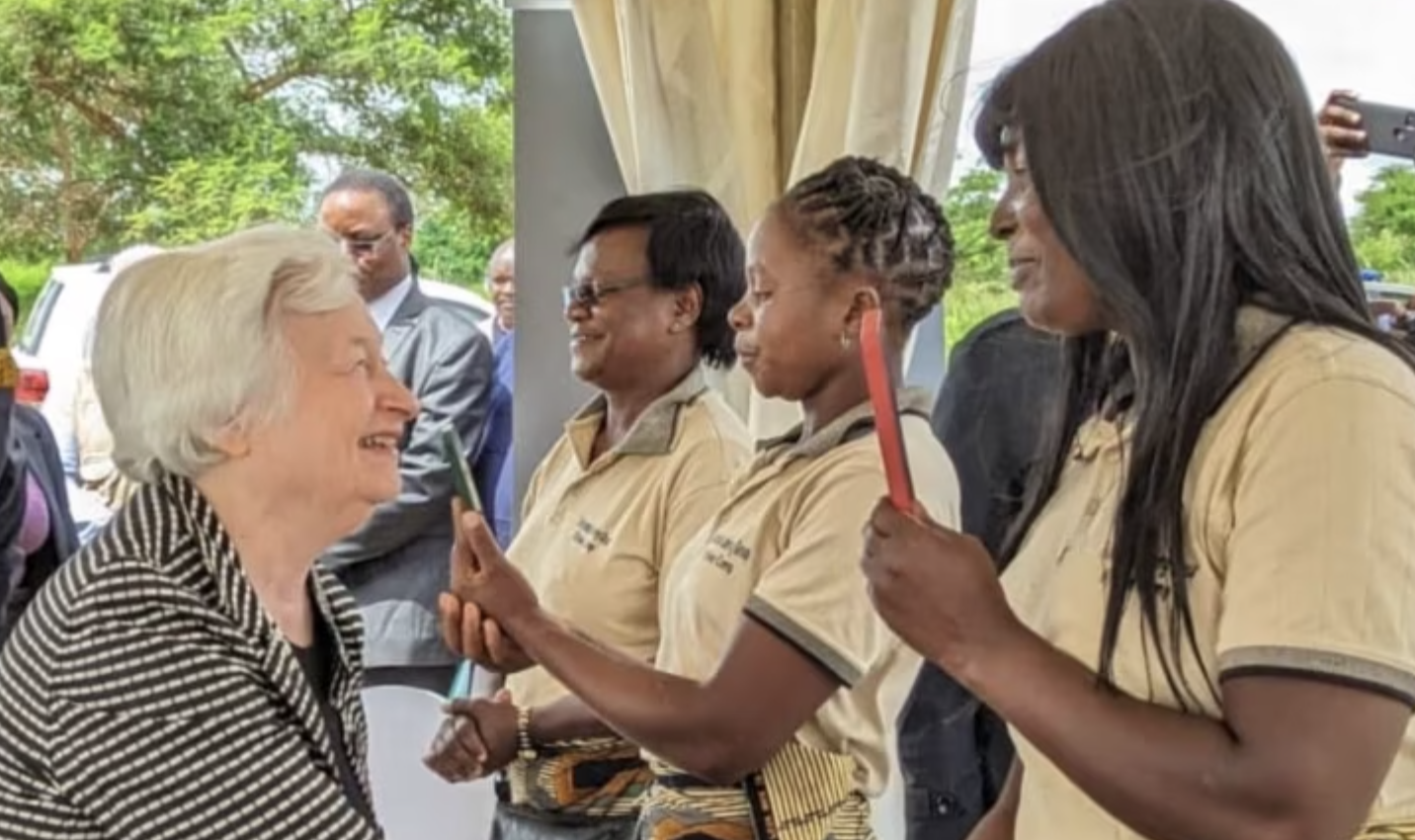
Yellen visits a female-savings co-op.
Monica Musonda, Java Foods’ founder, told Yellen at a roundtable Tuesday that staying afloat has been difficult, since her firm is one of the only food manufacturers in Lusaka. “But we are trying to make an impact in our community — you can see what we women can do.”
Java has worked under USAID’s Feed the Future program and with the US Partnership for Food Solutions, a non-profit founded by General Mills.
Yellen began her tour of Africa in Senegal and moves on to South Africa after Zambia.
This article originally appeared on AP News.
U.S. Treasury Secretary’s Visit Highlights Mylan Labs Success

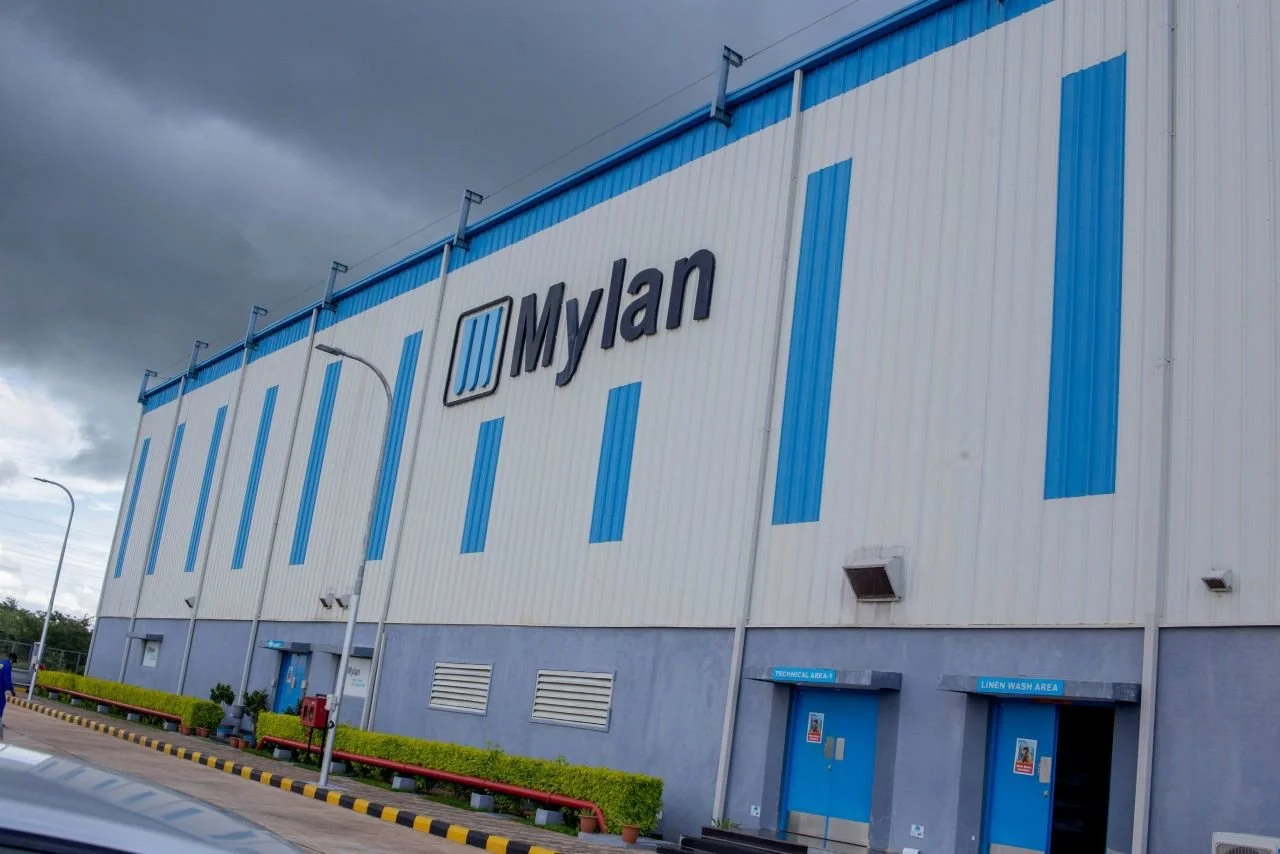
U.S. Treasury Secretary Janet Yellen’s upcoming visit to African nations will include a tour of the Lusaka distribution centre of Mylan Labs: a company at the forefront of Africa’s fight against disease and a model for international investment in Zambia.
Accompanying Secretary Yellen on the tour will be President Joe Biden, Vice-President Kamala Harris, Trade Representative Katherine Tai, Commerce Secretary Gina Raimondo and Yellen’s deputy Wally Adeyemo. Such a senior entourage for the Biden administration’s first extended visit to Africa demonstrates the importance of the trip and its goals.
The trip follows the U.S.-Africa Leaders Summit of December 2022. Biden informed African leaders from 49 countries and the African Union of America’s belief in a strong U.S.-African partnership for the future, saying at the three-day summit in Washington that “The United States is ‘all in’ on Africa’s future”. Finalised at the summit was a $15 billion two-way package of trade and investment deals, signifying a strong future for Zambia and the African continent more widely.
One of the success stories of U.S. private investment in Africa, Mylan Labs exemplifies the potential of the new slew of deals being agreed between the U.S. and Africa in an attempt to offer African leaders investment choices more sustainable than those presented by China.
Mylan Labs is a U.S.-based pharmaceuticals brand, whose African branch specialises in affordable anti-malarial and anti-retroviral medication to aid the fight against malaria and HIV. Located at the Lusaka South Multi Facility Economic Zone, the distribution centre was launched in September 2018 and employs 75 Zambian healthcare workers.
The centre was established with the goal of making medicine more easily accessible to Zambians in need. Mylan is the world’s largest supplier of HIV and AIDS treatments, and then-Minister of Health Chilufya announced that 86% of those in Zambia living with HIV had been put onto a treatment plan after the site’s launch.
The U.S. Department of the Treasury stated on their website that Secretary Yellen would “tour the facility and highlight U.S.-Africa joint efforts to promote a healthy population, improve global health security, and collaborate to prevent and prepare for future pandemics”.
A renewed U.S. desire for improved economic and diplomatic ties with African nations comes at an opportune time for Zambia, whose finance minister is exploring financial alternatives to Chinese lending. In September 2022, Zambia announced it would totally cancel 12 projects – half of which would be financed by China EXIM Bank, and another two by ICBC and Jiangxi Corporation, totalling overall to roughly $1.4 billion.
The $1.3 billion zero-interest loan secured in August 2022 from the UN’s financial agency, the International Monetary Fund, seeks to push general economic growth through recurrent spending as an alternative to the infrastructure-focused projects funded by Chinese investors.
The IMF has projected a global average of 2.7% economic growth for 2023; for Africa, meanwhile, it has forecasted a mean growth rate of 3.7%. The arrival of new American investment opportunities, Zambian economists hope, will capitalise on and drive this anticipated economic boom in the next phase of Zambia’s recovery and growth in the post-COVID-19 era.

Janet Yellen to visit African countries as US steps up overtures to continent
Washington is seeking to entice nations away from financial and resource ties to China
US Treasury secretary Janet Yellen this week begins a 10-day tour of three African democracies, as President Joe Biden’s administration steps up overtures to a continent where both China and Russia have made inroads.
Yellen will during her trip seek to flesh out a new US agenda to entice countries away from financial and resource ties to China, the continent’s biggest creditor, and persuade them to take a more robust line against Russia’s invasion of Ukraine.
The former Federal Reserve chair will visit Senegal, Zambia and South Africa, countries where the US has been touting investments in infrastructure, metals for electric vehicle batteries and renewable power. She is also expected to discuss rising debt levels in Africa after several defaults and the prospect of more as interest rates rise in the US and elsewhere.
“There’s a coming storm,” said Aubrey Hruby, cofounder of the Africa Expert Network in Washington. “A lot of what was borrowed in eurobonds is going to come due.”
Biden’s administration has stepped up engagement, hosting more than 40 leaders at a US-Africa summit in December in Washington, the first in eight years. The US made investment pledges worth $55bn over three years and backed the idea of the African Union joining the G20 permanently.
Last year, the US issued a new African strategy, which de-emphasised competition with China and Russia, but which made clear that Washington was seeking to make up for lost ground
By 2050, one in four people will be African and at least a third of minerals required for the green transition lie under its soil. Yet Barack Obama’s administration struggled to keep up engagement with the continent while Donald Trump did not attach great diplomatic importance to Africa.
The Biden administration is taking a different approach. “We believe Africa’s growth will be a key driver of global growth over the coming decades. As its population grows, it is essential that economies of African countries generate high-quality jobs at the needed pace. It’s in the US interest to be a partner in this growth,” a senior US Treasury official told reporters ahead of the trip.
Yellen is the first of several senior US officials expected to visit this year, including Biden and vice-president Kamala Harris. “It’s run-of-the-mill regular engagement and that’s what we were missing,” said Hruby.
The US is seeking to emphasise private sector activity as an alternative to Chinese state-backed loans that many indebted African nations can no longer afford.
Yellen’s trip “will highlight the Biden-Harris administration’s work to deepen US-Africa economic ties, including by expanding trade and investment flows,” the US Treasury said.
It also said that Yellen would “underscore the spillover effects of Russia’s illegal war in Ukraine, which have disproportionately hurt developing countries”. She would note the US provision of $13.5bn in food assistance, it said.
Yellen will meet President Hakainde Hichilema of Zambia, which is struggling to make progress on a restructuring of defaulted debts, many owed to Beijing.
Zambia, which defaulted more than two years ago, is meant to set a precedent for Beijing to work with other creditors on debt restructuring after a surge in lending by Chinese state banks to Africa in recent years.
But Zambia’s Chinese creditors are yet to agree debt relief terms, even though a bailout from the IMF hangs on the outcome. Yellen said last year that in Zambia’s case and that of other defaulting frontier economies, “the barrier to making greater progress is one important creditor country, namely China”.
In South Africa, Yellen will visit the coal-producing region of Mpumalanga to emphasise US support for a “just transition” to renewable energy. The US is contributing to an international package worth more than $8.5bn to accelerate the transition, which is contentious in South Africa, while seeking to soften the blow on coal-dependent communities through training and alternative industries.
Yellen’s visit comes soon after the traditional new year’s African tour by Qin Gang, China’s foreign minister, the 33rd year that the continent has been the foreign minister’s first port of call.
This originally appeared in the Financial Times
Photo: Saul Leob/AFP/Getty Images

USAID Partnership Transforming Zambia Into Africa’s Breadbasket

According to research undertaken by the United States Agency for International Development (USAID), 80 percent of smallholder farms in Zambia produce maize. Many of these smallholder farms are in isolated, hard-to-reach areas, making it difficult to transport their harvests, which, on an individual scale, are small, but collectively offer huge opportunity for the Zambian economy and nutritional wellbeing across East and Southern Africa.
In bumper years, such as the 2021/22 record maize harvest in Zambia, enormous volumes of excess maize have been produced overall by smallholder farms, leading to as many as 1.5 million metric tons of surplus corn being available for export. In spite of this, issues around storage and transport have led to maize contributing to 30% of Zambia’s total post-harvest losses.
The struggle to convert surplus maize into income for regional smallholder farms and the broader Zambian agricultural economy, however, is set to undergo extraordinary transformation in the immediate future.
In December 2022, USAID announced via the Prosper Africa Initiative that it would be joining a multi-pronged collaboration whose aim was to address the global food security crisis in the wake of the war in Ukraine and its impacts on food supply chains. Heading this joint effort would be: Africa-Global Schaffer, an agribusiness and energy firm; bechtel.org, the social impact branch of infrastructure firm Bechtel; and Empowering Farmers Foundation, the social impact arm of South Africa-based firm Export Trading Group.
This new partnership was unveiled at the US-Africa Leaders Summit 2022 held in Washington, D.C., from December 13th to December 15th, with its primary focus being to “promote shared prosperity by increasing the supply and quality of maize on the African continent”. USAID pledged to match its private sector partners’ investments in African food security 1:1. The first phase of the program will build Smart Integrated District Aggregation Centres (SIDAC) in areas where improving harvests will have the greatest impact on local economies and, more broadly, the East African trade routes to connect sellers of high-quality maize with buyers.
For Zambia, this will mean seven centres opening by the May harvest season of 2023, scaling up to twenty-three centres in the near future. The effects of such investment and improvements to infrastructure will be colossal: initially, around 100,000 metric tons of maize and other grains that would otherwise go to waste will be stored and sold each growing season.
Not only will this have transformative financial implications for farmers, but it will address grain price spikes in the region, mitigate food shortages, and prevent as many as 800 metric tons of carbon from going to waste - the equivalent of more than 80,000 gallons of diesel.
The potential of homegrown maize has become the cause of greater interest since the onset of fertiliser and food shortages triggered by the war in Ukraine. Speaking of the expectations of their union with USAID and Prosper Africa, Stu Jones, Bechtel’s Corporate Relations Manager, said, “our efforts will save lives, improve the future of the continent, and ensure sustainable outcomes”. Speaking with the Zambia News and Information Services, Julie Mellin, USAID Acting Public Affairs Officer, said that the partnership would help promote shared prosperity by increasing the supply and quality of maize on the African continent.
New supply chains enabled by the SIDAC programme will meet immediate demand, if the trends of 2022 repeat for the 2023 harvest. Faced with food shortages following the 2022 droughts, East African nations requested over 500,000 metric tons of maize, whilst regional neighbours, including Malawi, Angola, DRC, Mozambique and Namibia, requested an additional 800,000 metric tons, according to then-Agriculture Minister Reuben Mtolo in an interview with Farmers Review Africa. The 2022 maize harvest in Zambia, he added, created carryover stocks of surplus grain of 1.5 metric tons, thanks to the Food Reserve Agency’s efforts. The SIDAC programme will build on the Food Reserve Agency’s model to further reduce food waste.
European Union (EU) funding has already accelerated sustainable farming projects in Zambia, under the Sustainable Intensification of Smallholder Farming Systems in Zambia (SIFAZ) project. Established in 2018, SIFAZ was the result of a partnership between the UN’s Food and Agriculture Organisation (FAO), Zambia’s Ministry of Agriculture (MoA) and the International Maize and Wheat Improvement Centre (CIMMYT), and has begun to research agricultural methods for smallholder farms that were initially conceived by Feed the Future’s ‘Africa Research in Sustainable Development for the Next Generation’ (Africa RISING). By September 2022, a SIFAZ vision for sustainable maize yields had been approved by Zambia’s National Advisory Committee for the Approval of Candidate Technologies or Agronomic Practices.
The programme offered 3 agricultural formats that would grant farmers better yields while nurturing their soil – two involving incorporating grain legumes into maize fields to improve soil nitrogen content and pest management, and the third advising maize be grown on raised soil beds to improve soil oxygenation in flood-prone tracts of land. All three principles raised awareness among the Zambian farmer community of the importance of conservation agricultural approaches, namely minimal soil disturbance, soil enrichment through crop residue, and greater crop diversity.
Christian Thierfelder, a CIMMYT principal cropping systems agronomist based in southern Africa, explained the importance of these new agricultural principles to SIFAZ: “The official clearing of these transformative cropping technologies is a huge milestone for the project and for Zambia’s resource-poor farmers”. Working closely with the MoA and FAO, he added, CIMMYT was “planning research trials, demonstrations and promotion to reach 20,000 farmers as a first step”.
The significance of programmes like SIFAZ is difficult to overstate: approximately 300 million smallholder farmers grow maize in Sub-Saharan Africa, relying only on their soil and the seasonal rains. Per the Consultative Group on International Agricultural Research (CGIAR), maize covers up to 75% of cropland in East and Southern Africa and the Global Yield Gap Atlas (GYGA) estimates that the agricultural sector in Zambia supports livelihoods of 85% of the population. The recent announcement in November 2022, therefore, that the EU would grant SIFAZ an additional EU€20 million in funding demonstrates the globally understood importance of African maize sustainability programmes, and of the SIFAZ project in particular.
Comparative maize prices in 2022 illustrate the relevance of SIDAC’s goal of transporting surplus Zambian corn to neighbouring countries with unfulfilled demand. According to research undertaken by the American Journal of Agricultural and Biological Science, via The Conversation, market prices in Zambia were significantly below those of neighbouring nations. At the July peak, prices in Nairobi, Kenya, and Kampala, Uganda, rose above US$500/MT. Average prices in Zambia, meanwhile, were US$220/MT.
Per research conducted in the American Journal, the discrepancy of US$300/MT was double the maximum transport costs to Uganda or Kenya might have been, justifying the need for the infrastructure to export Zambian grain, connect outstanding demand with surplus supply and limit price spikes in the local region. Recent surge in demand for soybeans drove prices in East Africa above US$1000/MT; meanwhile, Zambian soybeans, enjoying a bumper harvest, were achieving a price of US$439/MT. SIDAC’s storage, and SIFAZ’s education, will create a platform to assist Zambian smallholding farmers to capitalise on market windfalls.
The future is bright, with strong funding, thorough research and new infrastructure creating a framework to combat regional food shortages, drive the Zambian agricultural economy, and, above all, empower smallholder farms to maximise their prospects.