

Zambia Finance Minister Eager to Renegotiate Debt, Awaits China's Team
Reuters, October 15, 2022
WASHINGTON/JOHANNESBURG, Oct 15 (Reuters) - Zambia's finance minister said on Saturday it is still unclear who will be leading talks for renegotiating its nearly $6 billion debt with China, the largest bilateral creditor of the first African sovereign default in 2020 after the COVID-19 pandemic hit.
China co-chairs a committee of official bilateral creditors with France as part of a debt restructuring that Zambia is seeking under the Group of 20's Common Framework, a platform for highly indebted countries to rework their debt with bilateral creditors.
"It is up to the Chinese authorities to choose who they want to represent them," Situmbeko Musokotwane said in an interview with Reuters on the sidelines of the International Monetary Fund and World Bank annual meetings in Washington.
"I don't know at this particular moment," he said, when asked who represents China on the official creditors committee.
Western countries this week ratcheted up their criticism of China, the world's largest bilateral creditor, as the main obstacle to moving ahead with debt restructuring agreements for the growing number of countries unable to service their debts.
At the end of 2021, China held about a third of Zambia's $17.27 billion international debt, according to Zambian government data. Since then, Zambia has cancelled $2 billion in undisbursed loans, many from Chinese lenders.
Musokotwane said negotiating with bilateral creditors including China before private creditors had "worked fairly well", but acknowledged there had been complaints from international investors who hold the country's sovereign bonds.
"It cannot be plain sailing because people approach it from different perspectives," he added.
Zambia secured a three-year $1.3 billion loan from the IMF in September. It is now seeking a present value $6.3 billion debt reduction, or 49% of the external debt being restructured. Some bondholders had previously said a 45% cut would be unacceptable.
"There is no point of pretending that there is something that is better, when doing so means that you leave Zambia still with an unsustainable debt situation," Musokotwane said.
"Because it means we will conclude today, then a month later or three months later, we default again."
Zambian grain exports could help to address shortages caused by Russia's invasion of Ukraine, Musokotwane said, adding that the government was hoping to host an overseas agriculture investors forum in the middle of 2023.
"We are making preparations for investors not just in Zambia, but from outside to take advantage of the land resources that we have, to come and produce food to export," he said.
The country is ready to open up to 100,000 hectares for this investment plan, and will start using a $300 million World Bank approved loan to improve roads, electricity and dams to attract overseas investors.
"Three or four" companies have expressed interest in acquiring Mopani copper mine, he said, including South Africa's Sibanye Stillwater, adding the interest was "what gives me the confidence that by the end of this year probably we should have a solution".
A proposal for the government to have "golden shares" in mining companies would enable it to veto any investors known to not be credible, he said.
The government is assuming an average copper price of $7,500 per tonne in 2023, with growing demand thanks to green technologies likely to support prices, Musokotwane said.
Image: Zambia's Finance Minister Situmbeko Musokotwane via Reuters

Zambian Kwacha Overtakes South African Rand
ZimEye, October 17, 2022
The Zambian kwacha is now stronger than the South African rand.
At about 09:20 am on Friday, one Zambian kwacha was worth R1,15.
At the same time, the rand traded at R18.20 to one US dollar, after it took a beating at close on the previous day, due to the greenback strengthening on the back of an expected interest rate hike as US inflation remained elevated.
South Africa’s economy has been dealt blow after blow this year, while still recovering from the Covid-19 pandemic.
The South African Reserve Bank has been on an upward trend of raising interest rates, in an attempt to curb soaring inflation all year, with oil prices see-sawing for most of the year, as well as dealing with the energy crisis and rolling blackouts imposed by the state-owned ailing power utility, Eskom, just to name a few.
Yesterday, the rand breached the R18.50 mark. The annual inflation rate in the US slowed for the third month running to 8.2% in September, the lowest in seven months, compared with 8.3% in August, but above market forecasts of 8.1%.
As the latest US inflation print came in above expectations, investors feared this might fuel further hawkish rhetoric by US Federal Reserve officials to keep up with hefty rate increases.
This saw emerging markets currencies suffering losses in the financial markets yesterday, as the fears drove risk-averse investors to safer havens, with the dollar again approaching its highest levels in 20 years.
Meanwhile, Zambia’s kwacha gained 27% against the dollar this year, driven by the election of Hakainde Hichilema.
Investors have bet heavily on the new government of that country securing a bailout deal with the International Monetary Fund.
The rand had already been dealt a blow by Wednesday’s US Federal Open Market Committee minutes, which revealed the escalation in the hawkish tone last month when members increased their interest rate hike forecasts in a firm focus on lowering inflation.
Analysts said the rand was at risk of further losses now, as the South African Reserve Bank (SARB) would take a cue from the Fed and increase interest rates significantly at its last meeting for the year next month.
To date, the US Fed has hiked rates by 300 basis points, while the SARB’s rate-hike cycle has encapsulated 275 basis points since it began in November 2021.

Zambia Sign Agreement with Namibia to Implement Historic Petroleum Pipeline
The New Dawn government has signed a Memorandum of Understanding (MoU) with Namibia regarding the development of the Namibia-Zambia Multi-Product Petroleum and Natural Gas Pipelines Project (NAZOP). The private sector development is set to supply 100,000 to 120,000 barrels of refined petroleum products per day.
The MoU represents both countries’ commitment to prioritising the petroleum sub-sector.
The Minister for Energy, Peter Kapala, explained; “Petroleum and its derivatives drive the engines of growth and development through the crucial role that they play in the production and transportation of goods and services. The NAZOP Pipelines system, when completed, is envisioned to supply 100,000 to 120,000 barrels per day of refined petroleum products in Namibia and Zambia. The NAZOP pipelines systems are also targeting supplying other countries in the SADC Region”.
As a member of the Southern African Development Community (SADC), and the Common Market for Eastern and Southern Africa (COMESA), Zambia has preferential access to a neighbouring market of approximately 320 million people.
Given the volatility of international prices, significantly exacerbated by the Russian invasion of Ukraine, the Minister was keen to emphasise the importance of utilising the best available means to reduce the cost of delivering petroleum products to Zambia and its partners. This reduction in costs will not only benefit consumers but also businesses who use petrol in their production.
The Minister also commended Basali Ba Liseli Resources Limited (BBLR) for the proactive initiative they have shown in driving the project. The Zambian government has shown its willingness to promote cooperation between private and public sector initiatives. It is believed such partnerships are amongst the best means to efficiently deliver development for the nation. In April of this year, the government established a Private-Public Sector Forum to promote precisely this type of collaboration.
The New Dawn administration is particularly welcoming to foreign investment following the upgrade of its S&P credit rating in February this year. The MoU is the latest in a series of international partnerships being discussed by the Hichilema administration. Earlier this year Zambia and the Democratic Republic of Congo (DRC) signed a historical cooperation agreement to mine cobalt for use in batteries in electric vehicles. This partnership is set to firm Zambia's position in the global supply chain.
Image: The Blowup via Unsplash

Zambia, US Hold Inaugural Business Summit to Boost Trade, Investment
Voice of America, October 13, 2022
Zambia is hosting a two-day business summit in Lusaka this week to try to attract American investors to the country.
Zambian officials say they want to diversify the economy and decrease dependence on extractive industries such as copper, which account for most of the country’s exports. Zambia’s Commerce Minister Chipoka Mulenga said the U.S. should be a key partner in that effort.
“But our focus right now is to see how best we can create jobs and revive our economic fortunes by value addition," said Mulenga. "We want to take advantage of the new energy system that the world is migrating to from fossil fuels into clean and green energy. And we are trying to take advantage of the minerals that we have and bring a consortium of developed players that have the technology already to see how we can develop our copper from exporting concentrates in its raw form into developing it into finished products for the green energy system that we want to go into.”
Zambia is Africa’s second-largest producer of copper – after the Democratic Republic of Congo – and an important source of other critical minerals like manganese, nickel, and cobalt.
But economists say Zambia’s dependence on minerals means it has not taken advantage of being a member in the Common Market for Eastern and Southern Africa (COMESA) or the Southern African Development Community (SADC).
“This is one of the challenges that Zambia has not really harnessed despite being in regional bodies such as COMESA and SADC," said Boyd Muleya of the think tank Zambia Trade and Policy Dialogue. "But going forward the engagement with the U.S. is very critical. We need to change the narrative because what we have seen in the past is mostly, we focus on aid that comes from the U.S., approximately about $500 million United States dollars annually.”
Government figures show Zambia-U.S. annual, bilateral trade was only $182 million in 2019.
Speaking at the business summit Wednesday, U.S. Ambassador to Zambia Michael Gonzales said he sees great potential in the country’s economy.
“The United States stands ready to partner with Zambia to ensure that this great country seizes the energy to become the Zambian renaissance and achieves that extraordinary potential," he said. "They are going to do this by leveraging on American technological know how to meet growing demand from ICT in every sector from health care all the way down.”
But economists such as Boyd Muleya with the think tank Zambia Trade and Policy Dialogue says another challenge for Zambia is attracting investment after becoming the first African country to default on its debt during the COVID era in 2020.
“One of the issues has been the uncertainty in terms of how Zambia’s debt will pan out. We have managed to get IMF executive approval in terms of a package, but we still are to conclude on the actual debt restructuring with respect to the terms put across in the comparability of treatment under the G-20 common framework.”
Zambia’s government is working on a debt restructuring deal with the International Monetary Fund that is expected to be concluded by the end of the year.
Despite the uncertainty, the two-day Zambia-U.S. Business Summit attracted hundreds of local and American investors from sectors including mining, technology, and healthcare.

Minister Calls for Further Investment in Tourism
Rodney Sikumba, the Minister for Tourism, has called for increased investment to spur the sector. His statement comes amidst a number of steps by the New Dawn administration to boost tourism in Zambia.
Mr Rodney, speaking at the Western Province Tourism, Trade and Investment Expo, described the government as “extending an olive branch to would-be investors” because “there are a number of places which need investment in the sector.”
The ministry would is aiming to generate more activity in the South-west tourism corridor by encouraging visitors to the famous Victoria Falls to stay in the country for longer. To this end, a bridge is set to be built across the Luanginga river to link Kalabo and Liuwa. Increasing accessibility in Zambia is perceived as crucial to boosting tourism across the country.

The New Dawn administration is also in the process of securing a $100 million USD loan from the World Bank in order to help fund infrastructure projects such as Kasaba Bay and Liuwa National Park. It is hoped that this loan will not only boost tourism but also catalyse local economic growth through its related employment opportunities.

In the recently published budget for 2023, it was announced that visa charges have been dropped for tourists from more than 35 countries. Visa fees have been removed for visitors from the EU, United Kingdom, United States, and China amongst others.
Image via Twitter @SikumbaRodney

Budget 2023: A Boost for Environmental Development
Environmental sustainability is one of the four pillars of the UPND’s economic transformation plan outlined in February 2022. The plan, which focuses on the period 2023-25, provides a platform from which the government aims to lay the foundation and grow towards medium-income status by 2030.
The recent budget includes a number of measures to support this goal. Tackling high levels of deforestation is a core government priority. To overcome unnecessary deforestation, the government will establish timber exchanges around the country in 2023 to improve transparency in the timber trade. The first exchange is set to be the Nangweshi in Sioma District, Western Province.
Environmental sustainability is vital to the long-term health of the Zambian economy. Rich in natural resources, it is crucial Zambia fosters sustainable investment initiatives to ensure the prosperity of future generations whilst attaining the full potential of Zambia’s resources. This is why the government have announced plans to diversify power generation to include more renewable forms of energy such as hydropower.
For example, the commission of the Kafu Gorge Lower 750MW hydropower station is expected both to foster economic growth and to provide sustainable, reliable, energy for Zambians. Remarkably, hydropower now accounts for 82% of Zambia’s electricity generation capacity. Building on this will not only foster more power, by meeting the government’s goal of universal power, but also provide employment opportunities across the sector. At present, Zambia generates 1,000 MW more energy that its peak demand. The excess generation helps Zambia export energy to Namibia and Zimbabwe under recently confirmed power supply agreements.
Furthermore, the government has signed a £1 billion green growth compact with the UK Government to further facilitate investment in the renewable energy sector. The UK Minister for Africa, Vicky Ford, emphasised that the investment would be important for “thousands of jobs and supporting green energy production.”
Nicholas Woolley, British High Commission to Zambia, commented; “This is an extremely exciting time for the partnership between the UK and Zambia. This Green Growth Compact enables us to formally build a stronger trade and investment relationship, based on sustainability, mutual prosperity and creating opportunities for businesses and communities in both our countries.”
In addition to this major investment from the UK Government, the New Dawn administration was pleased to announce that taxes on green bonds are to be removed. The current tax regime on bonds outlines that interest income earned by an investor on bonds attracts a 15% withholding tax. This move by the Minister of Finance and National Planning to exempt the 15% withholding tax on interest income earned on green bonds ensures that investors will not pay this withholding tax on their interest income. This draw to greener investments will act as an incentive for investors to act in line with Environment, Social, Governance (ESG) goals, will strengthen the environmental pillar of the UNPD’s economic transformation plan, and ultimately will aid Zambia in its commitment to meeting the UN’s Sustainable Development Goals.
Image: Diego Delso via Wiki Commons

Zambian Government Set to Boost Public Services and Social Protection
In order to build on the administration’s early progress, the 2023 budget includes a swathe of fresh funding for public services, such as health and education, as well as social protection schemes for the most vulnerable members of Zambian society.
Last month, Vice President, Mutale Nalumango, pledged to establish maternity wards at health facilities across the country. In particular, he praised the establishment of a ward at Luangwa, a district where previously mothers would have to travel 25 kilometres to the nearest maternity ward. The pledge comes as part of the New Dawn government’s desire to rectify the disparities found between well-funded urban constituencies and historically marginalised rural areas.
Nalumango did, however, emphasise that public-private partnerships would be crucial to the improvement of Zambia’s health provision. Speaking in Luangwa, he praised the Walkington family and the Luangwa Child Agency for their donations to the new maternity ward he was visiting. By combining the public and the private sectors the New Dawn government cements the importance of private entities in the provision of healthcare ensuring effective and efficient care throughout the region.
In continuance of this goal, the recent budget has allocated K1.1 billion to finance the construction and completion of 36 district hospitals, 16 mini hospitals, and 83 health posts, in order to reduce the long distances travelled to access health professionals. In addition to allocating K4.6 billion for the procurement of drugs and medical supplies, the government has also committed to the recruitment of a further 2,000 healthcare workers, having already recruited 11,000 health workers.
This is not the only major recruitment drive pledged in the 2023 budget. A commitment has also been made to the recruitment of 4,500 further teachers, on top of the 30,000 already hired. Whilst infrastructurally the government has proposed the construction of 120 new high schools and 56 early childhood learning centres with the financial investment of the World Bank. Further, they seek to complete the 115 secondary schools that were abandoned midstream since 2010.
The combination of state education and health services represents an important partnership in Zambia’s investment in the future. In conjunction with the NGO Healthy Learners, the government has re-stated its pledge to roll out the School Health Nutrition Policy (SHNP). As part of its commitment to “educating our future”, the nutrition programme is based on research that strongly correlates early nutritional outcomes with healthy brain development, adult health outcomes and higher economic output.
With Zambia’s young population – over half the population are under the age of 18 – such investment in health and education is an investment in the nation’s future growth. Upskilling the population is a crucial goal the government is fostering through public-private partnerships such as those with Huawei to train 5,000 students and with the EU and UN to invest $6.5 million USD.
The budget allocates K133.5 million to support the Keeping Girls in School Programme. The programme is thus far credited with keeping 5,000 girls in school and comes as part of the president’s desire to modernise the role of women in society. According to the charity Action Aid, nine million girls of primary school age will never start school or set foot in a classroom across the globe. This compares to just three million boys. According to the Gender Division Permanent Secretary, Mainga Kabika; “Hichilema is focused on eradicating child marriages by the year 2030… Children who were being married off early can now go back to school.”
In order to protect the most vulnerable in Zambian society, and to achieve the goal of becoming a middle-income country, the budget includes significant social protection measures. Social Cash Transfer and Food Security Pack Programmes are to increase both the number of recipients and the transfer value. The Social Cash Transfer Programme is set to be increased by 19.8%. The Food Security Pack’s allocation has been increased by K.1.2 billion. This food security programme is designed to support the vulnerable but viable farmers that represent a crucial pillar of the Zambian economy.
50% of Zambia’s land is arable but at present only 20% is farmed. As Zambia’s young population grows up, properly, but responsibly, realising the potential of this land will be vital not just to food security but also to economic growth. As part of the African Continental Free Trade Area (AfCFTA) Zambian acts as the breadbasket of southern Africa. As such, Zambia’s neighbours across its land borders represent an estimated market of 320 million people.
Image via Twitter @HHichilema

2023 Budget Aims to Boost Mining Investment
Last month, the New Dawn government outlined their plans to further boost investment in the Zambian mining industry.
A core element of the New Dawn government’s economic policy relies on boosting Foreign Direct Investment (FDI) into Zambia. This is expected to have the effect of boosting employment, realising the resource potential of the nation, and increasing growth across the Zambian economy.

President Hichilema at the recent China-Zambia Trade Investment Forum. Image via Twitter @HHichilema
Consequently, the most recent Budget, reduced the rate of tax payable on the transport of mining exploration rights. The rate, previously at 10%, now stands at 7.5% in a move designed to encourage further exploration activities by reducing the outgoing costs on a potential investor.
Further, the budget has restructured the mineral royalty rate to operate at incremental levels. The purpose of this is to mitigate the impact of price fluctuations and thus reduce the perceived risk of investment in mining.
These measures are designed to make the FDI climate more attractive in order to grow the economic potential of one of the country's greatest assets. The government is aiming to reach 1.5 million metric tonnes of copper production by 2023, increasing to 3 million tonnes by 2032. Such growth will require substantial foreign investment, but the outlook is optimistic.
The New Dawn government have already implemented selective measures to boost investment in the mining industry. The establishment of a Multi-Faculty Economic Zone (MFEZ) in Kalumbila will create tax benefits for mining suppliers and foster a hub of innovation that is expected to generate 10,000 jobs in 5-7 years.
Speaking in August, the Chief Executive of Barrick Gold noted; “At the moment the environment is very welcoming, driven by the new government.”
Kansanshi Copper-Gold mine already produces more copper than any other mine in Africa. First Quantum Minerals’ (FQM) further $1.35 billion dollar investment into the Kansanshi and Enterprise mines, agreed in May 2022, is set to boost the sector significantly. The Enterprise Nickel Project is set to be a top 10 nickel mining company globally.
Commenting on the investment, FQM emphasised that the government’s commitment to the predictability of the mining fiscal regime “provides the certainty needed to support large capital investments in Zambia.”
On top of promoting large scale investment, the New Dawn government is seeking to aid small-scale miners too. The government seeks to encourage mining cooperatives among artisanal and small-scale miners to facilitate access to support services and increase productivity. Measures to encourage formalisation will also be introduced to ease access to vital equipment and production-boosting training. Joint ventures between foreign investors and small-scale miners are also to be encouraged in order to increase access to affordable capital, a common growth inhibitor amongst informal and small-scale enterprises.
Image via Unsplash

Ukheshe & Digital PayGo Partner to Drive Zambian Business Growth
IT News Africa, September 27, 2022
Ukheshe’s SME in-a-box solution is making tangible changes to the lives of millions in Zambia through a partnership with Digital PayGo, improving financial inclusion and enhancing business dealings for entrepreneurs.
Digital PayGo, a local Zambian fintech driving a mobile-first approach, enhancing the digital payment space for SMEs, is the first partner to utilise Ukheshe’s SME in-a-box solution to its fullest extent and provides a range of virtual financial services to its customers.
“We’re so proud to be the technology partner enabling Digital PayGo in their partnership with Zambian bank Zanaco and Mastercard to implement this solution,” says Mark Dankworth, President of Business Development in Africa at Ukheshe.
“In line with Mastercard’s vision of enabling 50 million SMEs by 2025, the relationship between Ukheshe and Digital PayGo was a natural fit, given our shared values of driving financial inclusion with relevant solutions that address the needs of individuals and businesses. To be able to make a difference such as this in the Zambian Merchant payments ecosystem is truly exciting.”
The SME in-a-box suite of services includes acceptance of virtual and physical card payments; tap-on-phone (SoftPOS) and QR payments; digital onboarding; instant access to funds for money transfers and payments; virtual card issuing – all powered by Ukheshe’s award-winning Eclipse API.
But the benefits go far beyond just providing this functionality to consumers and businesses – useful as it may be, says Charity Mwanza, CEO – Digital PayGo.
“SME in a box – Lipila Na PayGo will cater for the pressing need of SMEs which is to make and receive payments seamlessly, while keeping a track record of all transactions thus making reporting and access to finance a possibility. We believe the solution will not only improve access to finance and financial inclusion but will increase trust in digital financial solutions as well.”
The convenience and safety of mobile and digital financial solutions, especially through Ukheshe, eases the way SMEs conduct business, therefore, contributing to the eventual push for a cashless society in Zambia.
For Ukheshe, this is another big step in the direction of its ultimate goal – being a global embedded finance enabler with the focus of providing innovative digital payment solutions to improve and address financial inclusion within emerging markets.
“Ukheshe is focused on democratising digital financial services through the accessibility of disparate technologies. Our technology has already improved financial access in locations across the continent, and we believe this partnership will do the same in Zambia and other emerging markets – changing millions of lives for the better,” says Dankworth.

Southern Africa Swiss Business Hub Eyes Zambia
The Independent Observer, July 27, 2022
The Southern Africa Swiss Business Hub, the representative of the Switzerland Global Enterprise (S-GE) and based at the Embassy of Switzerland in Pretoria, says it is considering investing in Zambia due to the country’s economic turnaround and a conducive business environment.
Head of Swiss Business Hub-Southern Africa Stephanie Labite, says the hub wants to spread its business tentacles across Southern and East Africa, supporting Small and Medium-Sized Enterprises (SMEs) and that Zambia is up the pecking order on its plans.
Ms. Labite said this in Pretoria during a business meeting with Zambia Acting High Commissioner to South Africa Inonge Mwenya.
She said the Southern Africa Swiss Business Hub has a specific mandate that focuses mainly on business and trade developments with key interest in infrastructure and technology, a domain of opportunities it is looking for in Zambia.
She says this will promote Zambia to Swiss business investments in South Africa as the hub has access to in-depth market knowledge through a local network of experts in all sectors of the economy and that this is the reason Zambia is its next preferred destination for investment.
She says the hub wants to collaborate with different stakeholders in Zambia such as the Zambia Development Agency (ZDA) and the Chambers of Commerce among others, as its motive is to engage Government while working with the private sector in exploring business opportunities and forging partnerships.
Meanwhile, Zambia Acting High Commissioner to South Africa, Inonge Mwenya says she is happy that the Hub is looking forward to partnering with Zambia and has pledged the Mission’s facilitation in actualising the interest expressed by the Hub in this regard.

Mining and Technical Exhibitions Expo Begins in Zambia
Foreign Brief, September 26, 2022
Zambia’s Mining and Technical Exhibition (MTE) begins today.
The MTE event takes place throughout Sub-Saharan Africa with the goal of introducing innovative technologies and developments in the mining sector to Zambia’s top mining companies like Konkola Copper Mines. Zambia is home to some of the world’s largest copper deposits and has smaller but exploitable cobalt, manganese and nickel deposits. Copper accounts for 60% of Zambia’s total exports. For years, investment has been hindered by inconsistent policies and unfavorable political conditions.

Image via First Quantum Minerals
First Quantum Minerals, a Canadian mining company, recently announced a $1.2-billion-dollar investment in Zambia’s Kansanshi copper mine, the largest such mine in Africa, indicating a trend towards more investment in Africa’s “Copper Belt” between Zambia and The Democratic Republic of Congo. With copper demand expected to grow as the renewable energy revolution continues and traditional producers, such as Chile and Peru facing greater political and regulatory uncertainty Zambia may come to the forefront as a viable source of copper.
Today’s exhibition where suppliers will showcase key products and innovative technologies that will be important for ramping up Zambia’s productive capacity by reducing costs to support major increases in output to support growing demand for copper cables and wires needed for electric vehicles, solar panels and other products for a global green economy transition.

Glencore Proposes Loans to Ensure Production at Mopani Copper Mine
Reuters, September 23, 2022
Glencore Plc and Zambia’s state-owned mining company ZCCM-IH could jointly lend Mopani Copper Mines $200 million to help cover running costs under a proposal made by the global miner last week, a letter seen by Reuters showed.
Glencore, which owned Mopani until March 2021, is prepared to lend up to $100 million as a short-term cash injection to Zambia’s Mopani copper mine, the global miner said in a Sept. 12 “non-binding letter of intent”.
Mopani Copper Mines is a large mine and smelter complex that Glencore sold to state mining investment firm ZCCM-IH in 2021 after drawing the ire of the Zambian government by putting it on care and maintenance in 2020 at a time of lower copper prices.
Switzerland-based Glencore however kept the exclusive right to sell Mopani’s production when it sold its majority stake in the asset to ZCCM-IH in a $1.5 billion deal funded by debt.
The more than 90-year-old mine has the potential to produce 225,000 tonnes of copper annually, nearly three times its expected 2022 production, Mopani Copper Mines officials have said, but it needs investment of at least $300 million to fund a complicated underground expansion.
With copper production falling and Mopani struggling to pay suppliers on time, ZCCM-IH in June hired investment bank Rothschild & Co for a strategic review that aims to find a new investor for the mine.
While Mopani waits for new investment, its production has fallen, making running costs increasingly hard to cover.
In the letter to Rothschild, Glencore said Mopani needs $200 million in “short-term liquidity”, and proposed to split that equally with ZCCM-IH. The cash would help Mopani cover general costs including buying reagents and paying workers and contractors, according to a source with knowledge of the letter.
Neither Glencore nor Rothschild commented on the contents of the letter, possible negotiations between the parties or progress of the strategic review.

Mopani Copper Mine - Image Courtesy of ZCCM Investment Holdings
ZCCM-IH declined to comment on the letter, saying only: “Rothschild… are looking at a range of expressions of interests and letters of intent from various stakeholders aimed at ensuring the sustainability, growth and profitability of Mopani.”
Zambia’s mines ministry did not respond to questions about the letter.
In the letter, Glencore said it has already lent Mopani $47 million through procuring letters of credit to cover copper concentrate purchases and electricity bills. Under the proposal, Glencore would provide up to $53 million more through letters of credit.
The proposal did not specify the interest rate for the loan.
Reuters reported in May that Glencore was helping to pay some of the company’s running costs, including electricity bills.
It is in Glencore’s interest for Mopani to keep producing because ZCCM is paying off its $1.5 billion debt to Glencore through Mopani’s copper.
Glencore would require $120 million worth of copper concentrates, anodes, and cathodes to be at the Mopani smelter or being transported to the border as a guarantee for its $100 million loan, according to the letter.
With future demand for copper expected to be strong due to the growth of electric vehicles, charging stations and other renewable energy infrastructure as the world seeks to decarbonise, Zambia sees expanding the mine as an opportunity to generate much-needed income.

SpaceX Starlink Team Meets With Zambia Officials for Satellite Internet Services
Tesla Rati, September 19, 2023
SpaceX is talking with Zambia officials, offering Starlink’s internet services to the country.
Recently, Jito Kayumba—the Special Assistant to the Republic of Zambia—tweeted about SpaceX and the country’s officials meeting about Starlink services.
“Our President’s engagement with the team from SpaceX and their Starlink initiative will escalate Zambia’s position in the digital economy and enable universal access to internet and other technologies. Grateful for this initiative from visionary entrepreneur Elon Musk,” tweeted Kayumba.
Elon Musk responded to Kayumba’s tweet, expressing his excitement for SpaceX’s Starlink service’s availability to the people of Zambia.

INTERNET IN ZAMBIA
According to DataReportal, Zambia had 5.47 million internet users as of January 2022. The number of internet users in the country increased by 5.4% between 2021 and 2022. At the beginning of the year, 71.5% of the population remained offline.
Zambia’s media mobile internet connection speed through cellular networks was 12.08 Mbps, up by 3.94 Mbps compared to late 2021. The country’s median fixed internet connection speed was 4.65 Mbps, down by 2.14 Mbps versus late last year. With such internet speeds, Starlink’s high-speed connection will definitely be appreciated in Zambia.
PROSPERITY THROUGH THE INTERNET
Due to the COVID-19 pandemic, many schools shifted from face-to-face classes to online learning platforms for distance learning. In 2020, the Save the Children of Zambia organization reported that only 0.8% of children from poor households had access to the internet to attend online classes.
Online classes were introduced across schools in Zambia in 2012-2013. When the pandemic hit, the country still lacked the necessary infrastructure to support distance learning.
Internet Society believes expanding internet access throughout Zambia would make education more affordable along with other benefits. It argues that access to the internet would give the people of Zambia access to health and shopping services, increase their productivity, and bring about technological development.
Starlink is now available on all seven continents, even Antarctica—aka “The Ice.” SpaceX recently installed a Starlink terminal at the McMurdo Station on the south tip of Ross Island in Antarctica.

Zambia's Energy Sector Drives the Country's Industrial Base... as Petroleum Pushes Social Interaction
Times of Zambia, September 14, 2022
ENERGY is a key sector to Zambia's socio-economic development and is inextricably linked to, and exerts a strong influence on other sectors of the economy.
Agricultural and industrial production, mining, tourism, construction, social and administrative services all rely on energy to drive their growth.
Petroleum products being mainly petrol, diesel and kerosene are used to fuel industrial activities both at micro and macro level, a clear demonstration of its importance to economic development.
In addition, petroleum products are useful at domestic level to fuel tanks of automobiles use by majority of the middle class for convenience, especially in a setting where public transport sectors are not well developed.
Hence, a private sector led energy industry is critical in enhancing the much needed capital to boost the industry's contribution to the economy.
With real Gross Domestic Product (GDP) estimated at 3.1 per cent this year, the energy demand is expected to grow at significant pace as well.
Zambia is said to be on a rapid economic recovery, driven by mining, tourism and manufacturing industries.
This is underpinned by the various reforms undertaken to revive Zambia's economy, as well as stimulate investment in key productive sectors.
The structural reforms, particularly those in the energy (Petroleum) sector are all aimed at accelerating growth, attracting investments and creation of employment for the Zambia people.
Thus, Petroleum plays a pivotal role in the economic development of every developing country like Zambia.
Access to gas and petroleum play an additional role of stimulating development in less developed rural area.
It is said that once a filling station is opened in rural area, not only does it serve to provide the primary function of providing fuel, but it results in the escalating of other industries such as lodges, entertainment spots, shops or industries and employment opportunities for the local population to mention but a few.
Furthermore, local tourism may be enhanced as well as promotion of social interactions and without fuel many of the social amenities cannot be properly exploited.
Politically, petroleum and gas related issues have been known to usher in new governments and result in the exit of others.
For example, the former Patriotic Front government kept domestic prices artificially low-through price control, export or quantity restrictions, or political pressures put on oil to act as subsidies.
With the coming in of the United Party for National Development (UPND) administration in August 2021, they adopted the "Cost Reflective Price Regulation on Petroleum" doing away with the subsidies.
The cost Reflective Price Regulation implemented by the Energy Regulation Board (ERB) is said to reflect the actual pricing of the commodity on the international market.
However, debates on the current pricing structure rages on from industry players, suggesting that it is difficult for businesses or individually to plan due to the monthly fluctuation of peterolum products.
Considering that Zambia is an energy importer that relies on raw material imports from the Middle East to be refined locally at the country's state-owned refinery, Indeni Oil Refinery, whose business model will soon change to a blending oil storage facility.
As a result, energy industry requires huge investments to encourage private sectorpar ticipation in the industry such as setting up of storage facilities.
For instance, Harvest Group of Companies and Othniel Brooks International Limited last year sealed a deal worth US$310 million from African Import-Export Bank (Afreximbank) to help build the country's three strategic fuel reserves.
This will help reduce the cost of fuel in Zambia and create product security once the three strategic reserves are completed.
The project will be implemented in the following provinces, North-western in Solwezi, Southern in Choma and Central in Kabwe.
Its Group chief executive officer Pauline Adaoha Ugo-Ngadi was quoted last year saying that the project will build infrastructure development in Zambia for the downstream sector of the oil and gas.
The Group intends to tap into opportunities that lie in Zambia's energy sector by working with progressive Zambians to grow local capacity in response to emerging global opportunities.
Harvest Group of Companies Limited is expanding its capacity to become a respected player in Zambia's oil and gas industry through promoting local participation.
This is a clear demonstration that with the correct policies and business friendly environment, many other ventures like the ones being undertaken by Harvest Group of Companies and Othniel Brooks International Limited will help accelerate Zambia's economic development.
Energy Minister, Peter Kapala, commenting on the developments in the sector says Government adopted a new business model for Indeni Oil Refinery to make it more efficient and effective.
Mr Kapala says works on the new Tanzania-Zambia Refined Oils Pipeline project has already begun, with the building of the 700-kilometer (435-mile) segment on the Tanzania side.
Zambia and Tanzania already share the Tanzania- Zambia Mafuta (TAZAMA) Pipeline, a 1,710-kilometer (1,063-mile) pipeline that has been transporting raw crude oil material for refining from the port of Dar-es-Salaam in Tanzania to the Indeni Petroleum Refinery in
Ndola from the 1960s until last year.
"The old pipeline has suffered wear and tear and some of its equipment is obsolete. However, the TAZAMA pipeline will be rehabilitated, cleaned up and reconfigured to start pumping finished products instead of commingled crude," Mr Kapala states.
Despite these efforts, "our two sister nations recognise the need to supplement the old pipeline, saying that the modalities to operationalise the framework of these pipeline have been concluded".
The new pipeline will run alongside the existing TAZAMA pipeline and will be more modernised and made mostly subterranean for security reasons.
The two pipelines - in addition to those from Angola and indeed Namibia - will bring in low-sulphur diesel from the Tanzanian ports into Zambia for our industries' mines and domestic use.
This will consequently reduce transportation costs and hence sustainably reduce the pump price of diesel, which is currently at a record high.
Within months, the pipeline will start pumping diesel fuel into Zambia. On the Zambian side, phase one of the new 12-inch diameter pipeline will end in Mpika District in Northern Province.
"We are in the final stages of finalising the financing mechanism for and we shall soon go out to tender. Phase one will cost between US$250 million and US$300 million to complete.
Phase two will see the pipeline extended from Mpika into Ndola on the Copperbelt Province and lastly phase three will be connected to a new pipeline in Solwezi in the mining region of North-Western Province," Mr Kapala says.
The total project cost for the two countries will be around US$1.5 billion.
Mr Kapala indicates that the country needs to act and reduce the local prices irrespective of what happens with the war in Ukraine, stating that the construction of the pipeline from Namibia, Tanzania and Angola are they way forward.
Zambia imports most of its petroleum requirements from the Middle East through the port of Dar-es-Salaam in Tanzania.
These two pipelines from Dar-es-Salaam will ensure these imports get into Zambia seamlessly. The pipeline from Angola will allow Zambia to finally access Angolan oil whose transportation will be cheaper than petroleum from the Gulf Region.
This applies to the Namibian oil too, once that also is available.
Mr Kapala also says the Government has renewed talks with the Government of Saud Arabia for cheaper importation of oil which will help oil marketing companies (OMCs) procure large volumes of the commodity.
On growing stakeholders' demands to revert to the quarterly fuel review to stabilise businesses ,the Minister says:"We have no plans to revert to previous ways of adjusting fuel prices after months, as that makes it hard to manage the debts owed to oil marketing companies and does not make the pump price to be cost-reflective."
Zambia's daily fuel consumption averages at two million litres (530,000 gallons) of diesel, one million litres of petroleum, and 800,000 litres of kerosene.
The desire by the Government is to facilitate ethanol blending plants in all the country's 10 provinces, which will be a game changer in promoting renewable energy in the country.
Mr Kapala says Government will start constructing ethanol plants in provincial centres for blending fuel, as a measure and strategy to reduce the cost of petroleum in the country.
"Blending of fuel will reduce the pump-price of fuel, which will reduce the cost of doing business and also facilitate the creation of more jobs for the youths.
"The plan is that the blended fuel will use ethanol from cassava," Mr Kapala states. In response to the Minister plans, Economic Association of Zambia (EAZ) is of the view that Government should come up with more incentives to propel biofuel blending activities in thecountry as it plans to establish ethanol blending facilities in the 10 provinces.
EAZ Copperbelt chapter chairperson Mathews Muyembe says the country lagged behind in terms of fuel blending despite having one of the robust biofuel blueprints in the region.
"We need to start offering incentives to investors wanting to start fuel blending to encourage more investments in the energy sector," Mr Muyembe says.
In terms of the investment opportunities, the expanding mining sector and economic activities will continue creating demand for the petroleum products in the country.
Therefore, it is evidently clear that Zambia's energy sector is set to drive industrial base that will stimulate growth and job opportunities for the Zambian people.
Image: Zbynek Burival via Unsplash

Zambia to Generate $2bn USD from Agriculture Sector by 2026
Farmers Review Africa, September 12, 2022
Zambia projects to more than double earnings to US$2 billion from exports of agriculture sector by 2026 following the unveiling of a five-year-blueprint to reinvigorate the economy through diversification from traditional copper mining to various growth sectors.
Under the 8th National Development Plan-2022-26-the Southern African state-seeks to bolster growth and add value to various traditional products and increase export earnings from the current US$756.2 million realised at the close of 2021.
According to the over K1 million blueprint unveiled by President Hakainde Hichilema dubbed: ” “Social Economic Transformation to Improve Livelihoods”, Zambia realises ten need for a diversified economy to overturn economic losses incurred through climate change, debt overhang and COVID 19 among other factors and will industrialise to fulfil its growth prospects.
Increasing agriculture production and productivity, promoting mining of traditional and nontraditional minerals, promoting value addition and manufacturing, promoting rural industrialisation as well as tourism. The Government will implement a number of strategies that are among key strategies for raising the country’s export profile.
Other areas to upscale to maintain growth in the period under review include enhancing management and productive use of water resources, promotion of irrigation, raising generation, transmission and distribution of electricity.
It seeks to extend diversification to other renewable as well as clean alternative energy sources, enhancing the management of petroleum products, improving transport and logistics, upscaling the provision of industry relevant skills, investing in applied research and development, enhancing digital capacity and.
In collaboration with the private sector efforts are underway to create an enabling environment for private sector growth in the agriculture sector by providing a stable trade policy with emphasis on easing restrictions on exports of agricultural commodities and facilitating access to finance.
” A robust comprehensive agriculture support programme will be implemented beginning from the 2022/2023 farming season.
“The programme will encompass the provision of inputs through the electronic agro-input system to include extension service support, support for value addition, storage and logistics. Further, the programme will provide for better targeting and equity across beneficiaries. ” read the blueprint.
Tree crop production and irrigation development will also be promoted. To support increased production in the sector, research and development will be promoted, particularly in the development of improved varieties and breeds of crops including tree crops, livestock and fish.
To increase hectarage under production and enhance productivity, agricultural mechanisation will be promoted. The Government will also promote farm block development with special focus on diversification of crops and expansion of the livestock and fisheries sub sectors.
The farm block concept entails the creation of specialised agricultural production and processing zones. Resettlement schemes will also be developed as centres for agricultural production.
Interventions in fisheries will aim at promoting investments for increased fingerling production and establishing and operationalising fish breeding and freezing centres, as measures to bridge the domestic fish deficit and expand into the regional market.
Livestock production will be enhanced through establishing community-managed livestock service centres, provincial livestock insemination centres and veterinary laboratories.
The Government will also devolve veterinary services to improve efficiency in the livestock sub-sector. These interventions are expected to result in an agricultural growth rate of at least 10 percent per annum over the Plan period.
Over the same period, agricultural exports are also expected to increase to above US$2 billion by 2026 from US$756.2 million in 2021.
On 2 September, President Hakainde Hichilema launched the blueprint with a call for hard work to actualize its objectives. The plan presents the country’s ambitious but bold steps for the country’s social-economic development.
The blueprint marks the country’s medium-term blueprint to unlock the country’s potential in various sectors for sustainable, holistic and inclusive development.
“May we as a people of Zambia cherish the art of hard work. It is a necessary ingredient to achieve success,” he said.
The Government envisions that the macroeconomic objectives set in the 105-page plan are projected to place the economy on a higher growth trajectory.
The vision is premised on restricting fiscal deficit, enhancing domestic revenue mobilization, and addressing and curtailing the accumulation of domestic arrears.
The plan was anchored on key measures targeted at addressing the debt problem, providing free education, scaling up social safety nets and taking service delivery and resources to the people.
Earlier, finance minister Situmbeko Musokotwane described the plan as a strategic direction setting development priorities and implementation of strategies that will play a pivotal role as building blocks toward the attainment of the national vision.
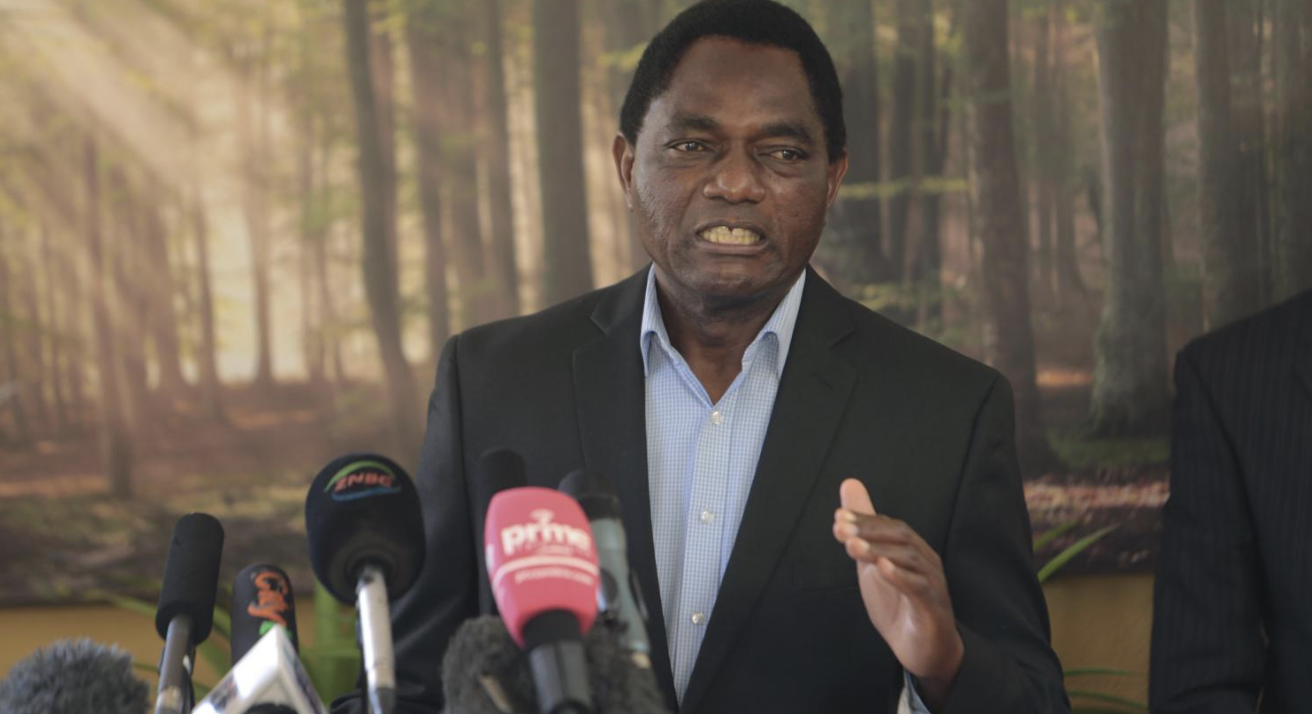
‘Calculator Boy’ Hichilema Revives Zambia’s Fortunes After Chinese Debt Disaster
The Times, September 8, 2023
Not that long ago Chinese credit was easy to get in Zambia. A government department could contact a Beijing lender directly without needing to get it signed off by finance ministers.
Millions of dollars were squandered or used to line pockets. Ministers campaigned in helicopters and the president had a Gulfstream jet. All the while the debts were racking up. It could not last.
“We have lost an obscene amount of money on corruption — money that could have been used to feed, house, clothe and educate our children,” said Hakainde Hichilema, a man once mocked as “calculator boy” for his head for dry numbers.
A year after securing the presidency — at his sixth attempt — in a landslide, Hichilema is unpicking the ruinous rule of his predecessor, Edgar Lungu, who threatened to turn Zambia into the new Zimbabwe.

Under Lungu’s administration, international debt quadrupled to more than 120 per cent of Zambia’s GDP. He failed to negotiate a lifeline from the International Monetary Fund (IMF) after it became the first African state to default since the 2005 agreement to wipe clean the debts of 30 of the continent’s poorest states.
The $1.3 billion IMF bailout secured by Hichilema’s government last week was seen as a huge vote of confidence in his commitment to restraint and reform. A successful exit from default could make Zambia a model for other states in Africa, where China is the biggest lender and the threat of debt distress is high. China has overtaken the World Bank as the biggest foreign creditor to developing countries.
The crisis has revived accusations, led by Washington, that Beijing is using “debt trap diplomacy” to hobble borrowers with unsustainable debts and then grab assets.
Zambia’s debt of $6 billion to 18 different lenders was twice previous estimates. But speaking to The Times, Hichilema, 60, denied that Beijing had an appetite for opacity. He described China as his country’s “all-weather friends”.
New laws on transparency and a cap on future borrowing will keep things honest, he said. “The only change we can probably say is that we have just raised the bar in terms of engagement.”
In the year since Hichilema took power, its currency, the kwacha, has become one of the world’s best performers against the dollar, having long been the worst. Inflation has bucked the regional trend, dropping to single digits, while neighbouring states have seen fuel and food prices surge.
One of the country’s richest men in his own right, Hichilema studied economics locally and for an MBA in Britain before building a business empire. Describing himself as a “volunteer president”, he does not need the salary.
• China debt ‘could bury poorest’
Though content that colleagues should draw their salaries, he would prefer more austerity as the country’s population of 13 million continues to suffer. A video of Hichilema rebuking local government officials for their taste in fancy cars lit up social media.
“I have to remind them they are there to serve and not be served,” he said. “There is no need to have top-of-the-range vehicles when your own constituents are going to bed hungry.”
After enduring beatings and dozens of arrests during his five failed runs for office, Hichilema insists that he has no appetite for vindictiveness. A pledge to recover what was looted has led to assets worth millions of dollars, including helicopters and property, being seized from Lungu, his family and former ministers. The proceeds have been used to fund more than 2,000 scholarships at the University of Zambia.
Though momentous, the IMF bailout will not bring quick relief to Zambians, 58 per cent of whom earn less than $1.90 per day; across sub-Saharan Africa it is 41 per cent.
“We cannot afford to be populists. We have to reform, reform, reform,” Hichilema said, firmly advising those without jobs to create work for themselves and not expect handouts. “There is nothing more satisfying and gratifying than earning your money in an honest manner and sleeping peacefully at night.”
• The Times view on Hakainde Hichilema’s election: Zambian Democracy
The free-for-all climate that marked life under the old guard is slowly lifting, according to Laura Miti, the head of a Zambian NGO focused on public accountability. “We’ve gone a year without a major corruption scandal,” she said. “There used to be one a week.”
Beyond the economy, she would like to see Hichilema promote some women to his cabinet, take a less conservative approach on social issues and urgently prioritise reform of laws that Zambia’s governments have consistently used to suppress free speech.
“It would not have taken much to improve things after Lungu,” Miti said. “We were at rock bottom. Hichilema has got a great deal more to do but it does at least feel like there’s an adult in the room.”
Image: TSVANGIRAYI MUKWAZHI/AP TO

Zambia’s Kwacha is the World’s Best Performing Currency Against the Dollar
Quartz Africa, September 4, 2022
Most African countries have been unable to tame rising inflation but Zambia has managed to reduce the inflation rate from 24.4% in Aug. 2021 to 9.7% in June.
Hi Quartz Africa readers,
When I was growing up, American action movies often featured one type of super-villain: A bulky, heavily-accented gruff Russian. At that age, I was not politically aware enough to understand why the hero had to be American and the villain Russian, and I never questioned it much.
As an adult now, I see how global geopolitics comes to play even in pop-culture. In every story, there has to be a hero, a savior of humanity, and the villain has to be someone who threatens these global ideals of democracy, peace and order. It’s even worse if the villain is trying to usurp the hero by almost landing the first man on the moon or having access to even more nuclear weapons.
This past week, the last leader of the Soviet Union Mikhail Gorbachev, died. As an African, the USSR’s legacy on the continent and the fall of the Soviet Union is complicated, as it brought both advantages and disadvantages. The steps Gorbachev took in dismantling the Soviet Union laid seeds for independence in certain parts of southern Africa, including eventually leading to the end of apartheid in South Africa.

John Wessels/AFP Via Getty Images
Since the fall of the Soviet Union, new narratives have emerged in Hollywood and elsewhere. One superpower is pitted against the other, with Africans expected to pick good from evil. But expecting a clear cut division between good and evil is a fallacy and a failure to understand history and the intricacies at play in every village, town, country and region. One person’s hero is another’s villain—Gorbachev too was more revered abroad than at home.
Your hero might be behind the assassination of DRC’s Patrice Lumumba, one of Africa’s greatest post-colonial heroes. Your hero might have destabilized Mali, laying the seeds for insurgency in the Sahel. Your heroes might have illegally over-fished with giant ships leading to the rise of piracy in the horn of Africa.
African governments’ apparent hesitancy to pick sides on certain geopolitical issues is all the proof needed that things are not always so black and white. Sometimes, it’s complicated. This pseudo-neutrality should be seen as a sign of wisdom from those who know that yesterday’s foes might be tomorrow’s friends. —Ciku Kimeria, Africa editor.
Featured Image: Lukasz Radziejewski Via Unsplash

IMF Approves USD 1.3 Billion Extended Credit Facility for Zambia
Zambia Invest, September 1, 2022
The Executive Board of the International Monetary Fund (IMF) just approved a 38-month arrangement under the Extended Credit Facility (ECF) in an amount equivalent to SDR 978.2 million (around US$1.3 billion, or 100% of quota).
The program is based on the authorities’ homegrown economic reform plan that aims to restore macroeconomic stability and foster higher, more resilient, and more inclusive growth.
The IMF explains that Zambia is dealing with the legacy of years of economic mismanagement, with an especially inefficient public investment drive.
Growth has been too low to reduce rates of poverty, inequality, and malnutrition which are amongst the highest in the world.
Zambia is in debt distress and needs a deep and comprehensive debt treatment to place public debt on a sustainable path.
The ECF-supported program will help reestablish sustainability through fiscal adjustment and debt restructuring, create fiscal space for social spending to cushion the burden of adjustment, and strengthen economic governance, including by improving public financial management.
The program will also catalyze much-needed financial support from development partners.
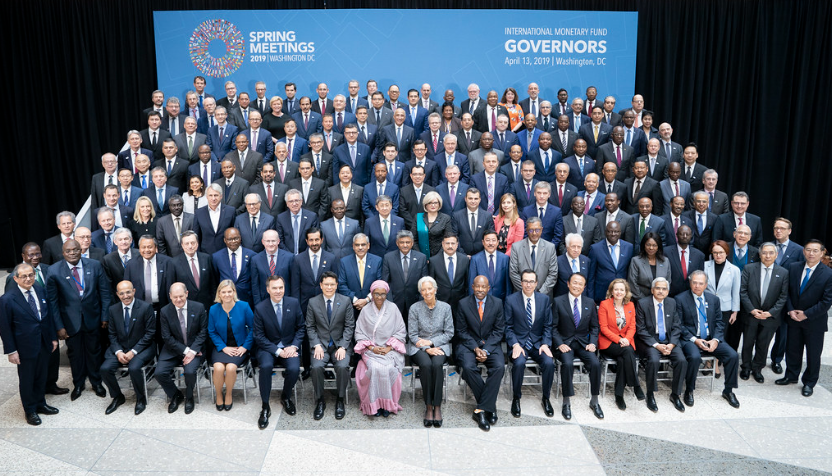
IMF Governors Meeting in 2019, Image via Flickr
The Executive Board’s decision will enable an immediate disbursement equivalent to SDR 139.88 million (about USD 185 million).
Following the Executive Board discussion on Zambia, Ms. Kristalina Georgieva, IMF’s Managing Director, issued the following statement: “Zambia continues to face profound challenges reflected in high poverty levels and low growth. The ECF-supported program aims to restore macroeconomic stability and foster higher, more resilient, and more inclusive growth.”
“Restoring fiscal sustainability will require a sustained fiscal adjustment. The authorities’ adjustment plans appropriately focus on eliminating regressive fuel subsidies, enhancing the efficiency of the agricultural subsidy program, and reducing inefficient public investment. Domestic revenue mobilization also needs to support the medium-term adjustment. The adjustment creates fiscal space for increased social spending to cushion the burden on the most vulnerable, help reduce poverty, and invest in Zambia’s people. The ongoing expansion of the authorities’ Social Cash Transfer program and their plans to increase public spending on health and education are particularly welcome. Together with the fiscal adjustment, Zambia needs a deep and comprehensive debt treatment under the G20 Common Framework to restore debt sustainability.”
“A substantial strengthening of fiscal controls is needed to support the fiscal adjustment, as well as address governance and corruption vulnerabilities. Public investment management and procurement practices need to be strengthened to ensure transparency and the efficient use of scarce resources. It will also be important to bolster the framework for monitoring fiscal risks, particularly those related to large state-owned enterprises.”
“The Bank of Zambia should continue its efforts to reduce inflation and preserve financial stability. International reserves should be replenished as conditions allow and the exchange rate should continue to reflect market conditions. Addressing high NPL levels and ensuring adequate capital buffers will also be important.”
For this part, Zambia’s President Hakainde Hichilema wrote on his Twitter account: “We are delighted that the IMF shares our vision for a prosperous Zambia, with strong socio-economic growth at the heart of our development plans. Thanks to the people of Zambia for believing in us. There is still much more to be done.”

Zambia’s Inflation Down to 9.8% in August 2022
Zambia Invest, September 1, 2023
Zambia’s Annual inflation for August 2022 decreased to 9.8% from 9.9% recorded in July 2022. This means that on average, prices of goods and services increased by 9.8% between August 2021 and August 2022.
Annual Food and Non-Food Inflation
Annual food inflation for August 2022 was recorded at 11.3% from 12.0% in July 2022.
This development was mainly attributed to price movements in food items such as meats (brisket, mixed cut, t-bone, beef sausages, mince meat, ox-liver, chicken live); fruits (oranges, lemons, bananas, apples, watermelons, pineapples, avocadoes), rice local and eggs.
The annual non-food inflation for August 2022 was recorded at 7.8% from 7.2% in July 2022. This outturn was mainly on account of price movements in non-food items due to the base effect in Transport.
Annual Inflation Rate by CPI Main Groups
The Annual Inflation Rate in August 2022 increased for:
Transport: the CPI for the Transport main group increased by 13.6% between August 2021 and August 2022. This was higher than the 7.3% in the same month of 2021 and 4.3% recorded in July 2022.
Communication: the CPI for the Communication main group increased by 2.1% between August 2021 and August 2022. This was lower than 3.8% in the same month of 2021 but above 1.9% recorded in July 2022.
The Annual Rate of Inflation for August 2022 decreased for:
Food and Non-alcoholic Beverages: the index for the Food and Non-alcoholic beverages main group increased by 11.3% between August 2021 and August 2022. This was lower than 31.6% in the same month of 2021 as well as the 12.0% recorded in July 2022.
Alcoholic Beverages and Tobacco: the index for the Alcoholic Beverages and Tobacco main group increased by 7.0% between August 2021 and August 2022. This was lower than the 13.3% in the same month of 2021 and 8.1% recorded in July 2022.
Clothing and Footwear: the CPI for Clothing and Footwear increased by 9.1% between August 2021 and August. This was lower than 16.1% in the same month of 2021 and 11.5% recorded in July 2022.
Housing, Water, Electricity, Gas, & Other Fuels: the CPI for the Housing, Water, Electricity, Gas & Other Fuels group increased by 5.4% between August 2021 and August 2022. This was lower than the 22.7% recorded in the same month of 2021 as well as 6.2% recorded in July 2022.
Furnishing, Household Equipment and Household Maintenance: the CPI for the Furnishing, Household Equipment and Household Maintenance main group increased by 6.0% between August 2021 and August 2022. This was lower than 21.2% recorded in the same month of 2021 and below 7.1% recorded in July 2022.
Health: the index for the Health main group increased by 4.8% between August 2021 and August. This was lower than 12.3% in the same month of 2021 as well as 5.1% recorded in July 2022.
Recreation and Culture: the CPI for the Recreation and Culture main group increased by 12.3% between August 2021 and August 2022. This was lower than the 15.9% in the same month of 2021 and 13.7% recorded in July 2022.
Restaurant & Hotel: the index for the Restaurant & Hotel main group increased by 6.8% between August 2021 and August 2022. This was lower than the 14.1% in the same month of 2021 as well as the 8.0% recorded in July 2022.
Miscellaneous Goods and Services: the CPI for the Miscellaneous Goods and Services main group increased by 8.8% between August 2021 and August 2022. This was lower than 15.4% in the same month of 2021 and below the 9.9% recorded in July 2022.
The Annual Rate of Inflation for July 2022 remained the same for:
Education: the CPI for the Education main group increased by 2.3% between August 2021 and August. This was lower than 5.6% in the same month of 2021 and the same as that recorded in July 2022.

Contribution of CPI Main Groups to Overall Inflation Rate of 9.8%
Of the overall 9.8% annual inflation, Food and Non-alcoholic beverages group contributed 6.4% points, while Non-food items accounted for 3.4% points.
Of the 3.4% points, Transport contributed the highest at 0.9% points, followed by Clothing and footwear& Housing, water, electricity, gas and other fuels at 0.7% points each; Furnishing Household Clothing and footwear equipment and routine household maintenance groups contributed 0.4% points. The rest of the Non-Food group accounted for the remaining 0.7% points.
August 2022 Overall Monthly Inflation
Overall monthly inflation for August 2022 was recorded at 0.3% compared with 0.4% the previous month. This outturn was mainly attributed to price decreases in some non-food items. Monthly food inflation for August 2022 was 0.4%, an increase of 0.1% points from 0.3% in July 2022. This development was mainly attributed to the general decrease in prices of items such as Vegetables (Rape, .Sweet potato leaves, lumanda, Cabbage, Tomatoes), Dried bream. Monthly non-food inflation for August 2022 was recorded at 0.1% from 0.7% in July 2022. This outturn was mainly attributed to a slow down in price increases of non-food items such as Fuels & lubricants (Diesel, Petrol, Engine oil) and; Passenger transport by road (Minibus fare, Coach fare).
s

AfDB’s $14m USD, Zambia’s Agricultural Future - Mtolo
Farmers Review Africa, September 1, 2023
Africa Development Bank funded US$14.4 million concessional loan planned for disbursement for agriculture and aqua-culture sector development has added impetus to Zambia’s quest to diversify and redeem the economy with plans to promote farming blocks.
Last July, the AfDB’s board of directors gave consent for Zambia to access to its concessional window dubbed: “Building today, a better Africa tomorrow” of a staggering a $14.4 million loan for food security, amid heightening desire to use natural and human resources to bolster the sector and sustain its reliability as southern Africa’s regional bread basket.
The funding, expected to start being utilized this year, anchored in the African Development Bank Group’s African Emergency Food Production Facility will provide, among other facilitations, the country’s certified seeds and fertilizer to 45,000 emergent farmers, a move the Government has applauded.
The provision will be done using the innovation and ICT platforms through existing private sector-based distribution channels. Women and youths will receive 50%-subsidized seeds through an electronic platform that enhances transparency, accountability and sustainability.
Under the financing facility, the project will promote proven climate-smart agricultural practices employed by the Bank’s Technologies for African Agricultural Transformation Initiative (TAAT). Another outcome will be the implementation of agriculture and trade policy reforms.
Additionally, farmers are expected to receive 36,000 metric tons of fertilizer and 3,000 metric tons of improved seeds, as part of the expected outcomes. Further, farm gate fertilizer prices will be reduced by 50%. Majority beneficiaries will be women and youth who lack financial capacity to sustain the business.
A partial credit guarantee scheme will result in over 100,000 metric tons of fertilizer on the local market and stabilize prices. Over 90,000 hectares of maize and soya will be planted, with an incremental annual output of 265,000 metric tons valued at $43.72 million.
This will reduce potential food imports by 200,000 metric tons. The average farm income will rise from $350 to $500 per year. Zambia, one of the countries affected by the high fertiliser cost imported spurred by the Russia-Ukraine conflict, coupled with inflationary impact across various sectors.
Agriculture minister Reuben Mtolo told FRA, the assistance was a stimulant to the Government’s quest to use agriculture and aquaculture sectors as the country’s economic revival lines and meet national obligations amid increased donor interest to financing the National Agriculture Investment Plan (NAIP).
“……this is the beginning of the revolution of the agriculture sector, given the goodwill from the donor community and we hope to invest in irrigation, animal disease control and support to the small holder farmers, many that need farming inputs to reverse the losses incurred last season”
Minister Mtolo notes that with the planned promotion and establishment of farming blocks, the funding from AfDB and other donors will assist drive the revival of the agriculture and aquaculture sectors and that financing would be spread to all the 10 provinces of the country.
According to the Agriculture Productivity and Market Enhancement Project (APMEP) program, financed by the Global Agriculture and Food Security Program (GAFSP), a Financial Intermediary Fund hosted within the World Bank Group, the funds will go towards technical assistance to farmers in various aspects.

Recently, GAFSP had extended $31.13 million in grant funds Zambia for APMEP, while at the time African Development Bank disbursed the money and provided technical expertise.
Under APMEP, Zambia will expect to develop irrigation schemes, intensify agricultural mechanization, promote conservation agriculture, crop diversification, and enhanced aquaculture and livestock development in Zambia.
This is part of an integrated agriculture value chain development under the Ministry of Agriculture. The project contributes to economic growth and poverty reduction by enhancing food security, incomes, and nutrition among participating households.
According to the Bank’s Director of Agriculture and Agro-Industry Martin Fregene; “GAFSP has provided farmers with ways to improve their livelihoods and created employment, especially for vulnerable people like women and youth in rural areas.”
Zambia lost 25% of the grain produced during the 2022 farming season, dropping to 2.7 million metric tons, 600, 000 less than produced a year earlier. The low output is despite increasing demand for maize from neighbors, hard hit by drought and climatic change effects.
To grow agriculture, Zambia’s finance minister Situmbeko Musokotwane incentivized the sector during the 2022 national budget to help transform the agriculture sector into an agro-export industry and attract investments in farm blocks.
Government proposed to promote large-scale estate production for both domestic and export markets.
It will provide necessary infrastructure in farm blocks for them to be operational. The incentives will promote agro-processing and exports, and more investors will be willing to invest in the farm blocks.
Government in collaboration with the World Bank seeks to help service the farm blocks. This will motivate players in the agriculture sector to produce finished agricultural products for export, farm blocks being effective vehicles for economic growth.
“We need to attract investors who will establish mango, banana and sugar plantations to make finished agricultural products” he told lawmakers on 29 October.
Image: James Baltz via Unsplash